About Ignacio
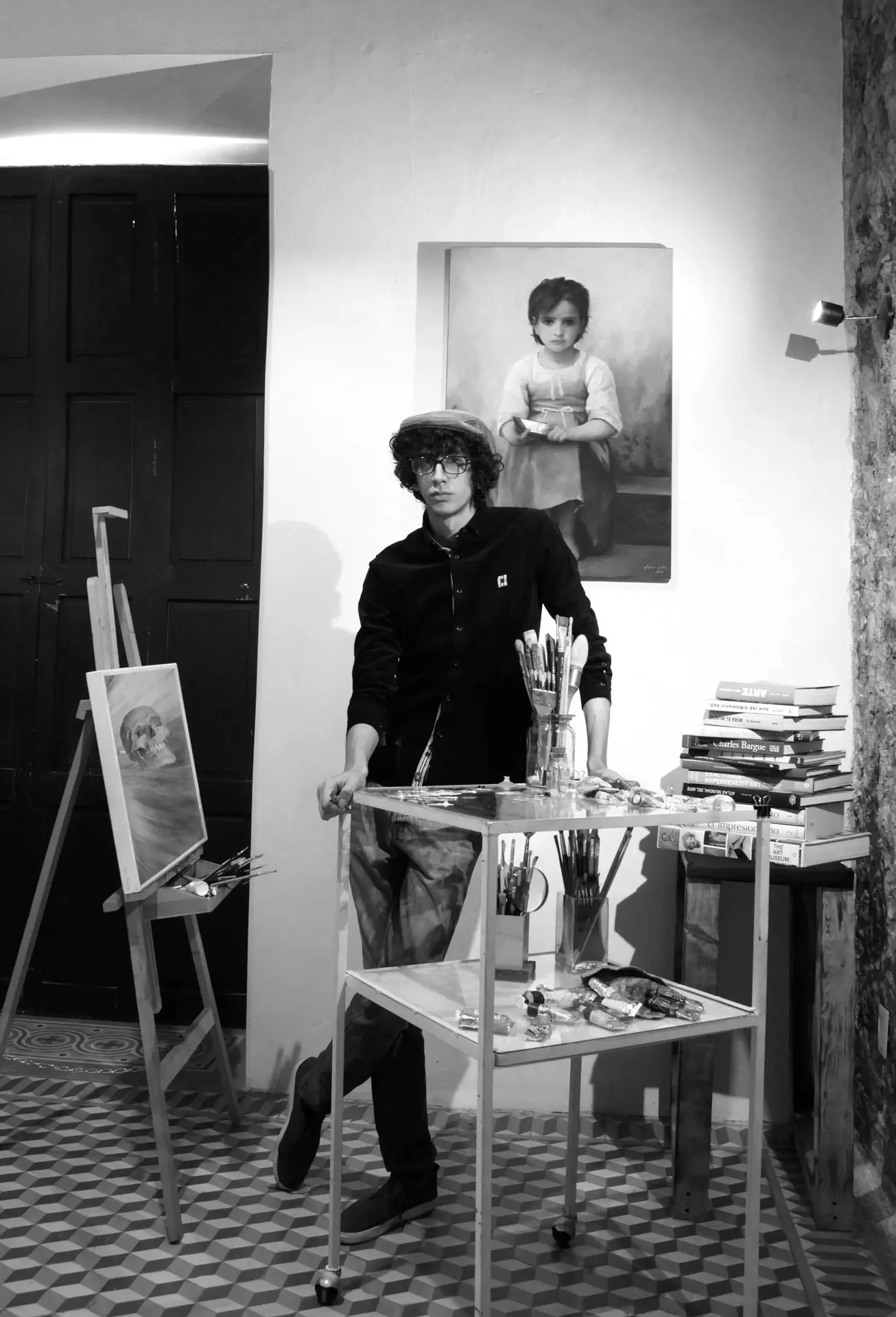
Ignacio Chávez paints from a question that has never let go of him: how we see. Not painting as something pretty on a wall, but as a way of understanding what we do with whatever is in front of us how we read it, and how much we make up without noticing. He works mostly in oil and pastel, with a serious classical training behind him years of painting from life, observing until it hurts but what interests him isn't showing off the technique. It's what that technique can pull off: presence, tension, an image that stays with you.
What makes his work different is that he never fully closes the meaning. A piece might start from a crystal-clear idea or from a smudge that showed up while he was painting, and plenty of them end up completely different from how they began. To build his images he mixes direct observation with photography, digital montage and, sometimes, AI; not for the trend of it, but to reach references that would otherwise be impossible. The result is paintings that look recognizable at first and, while you're looking, slowly turn into something else.
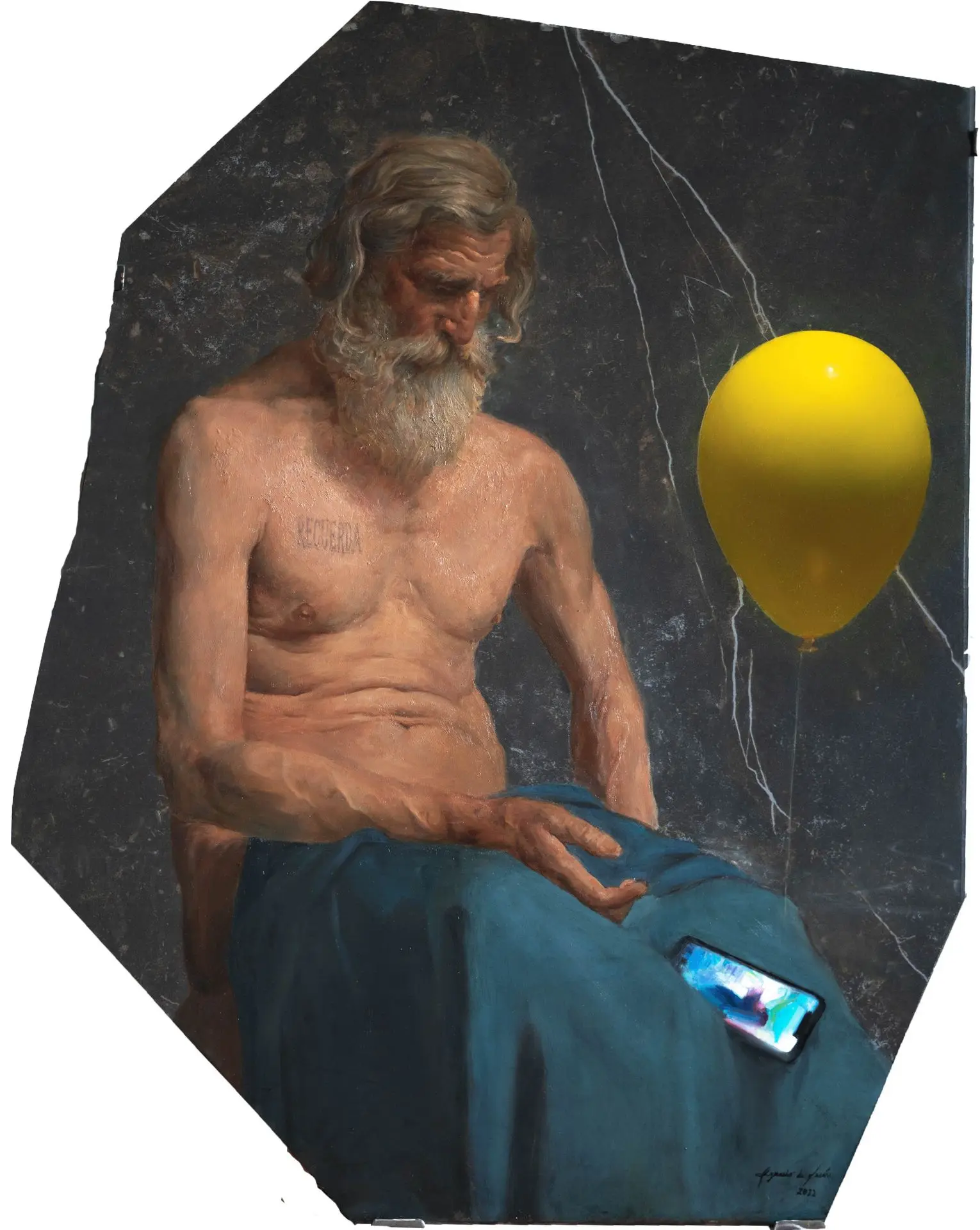
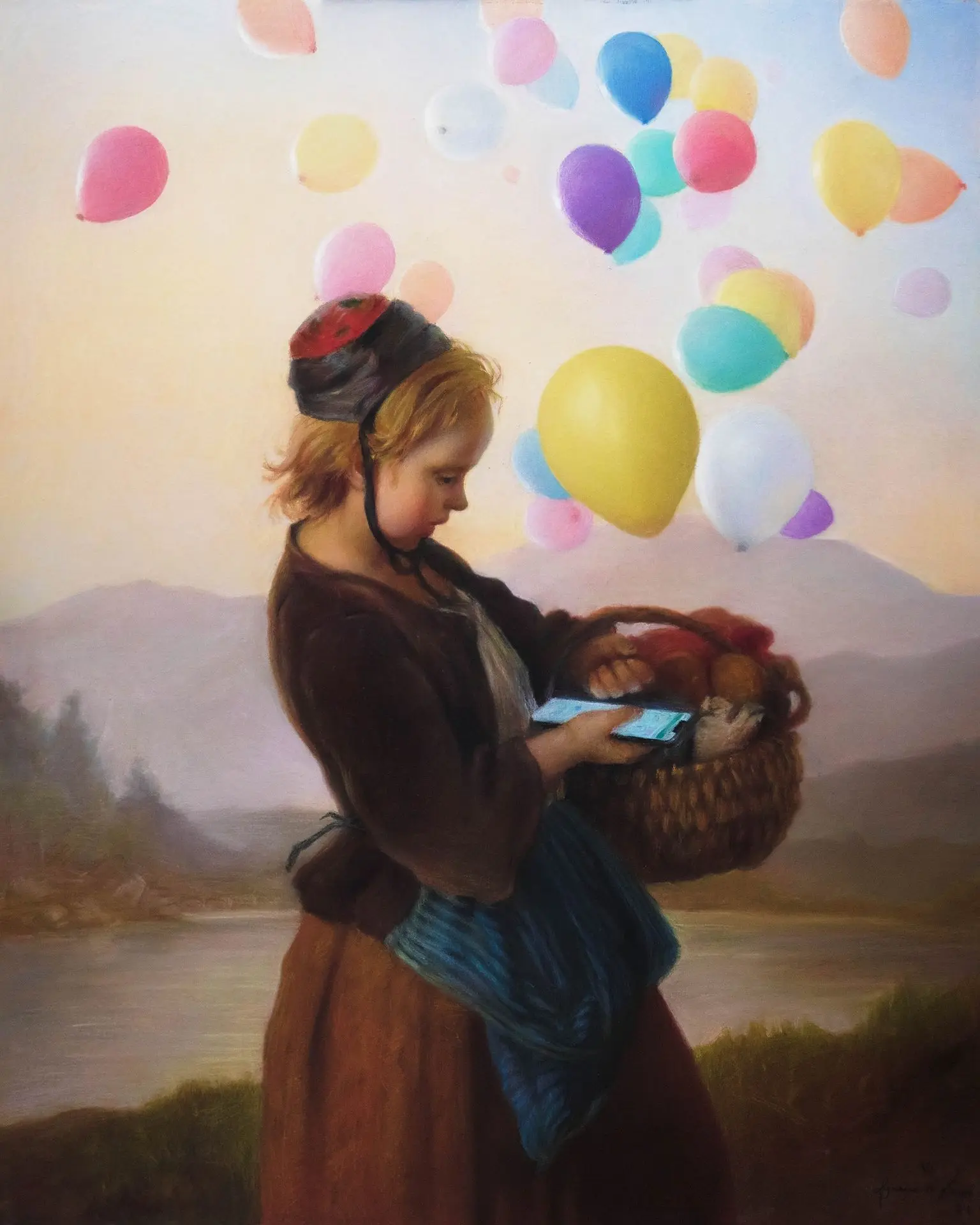
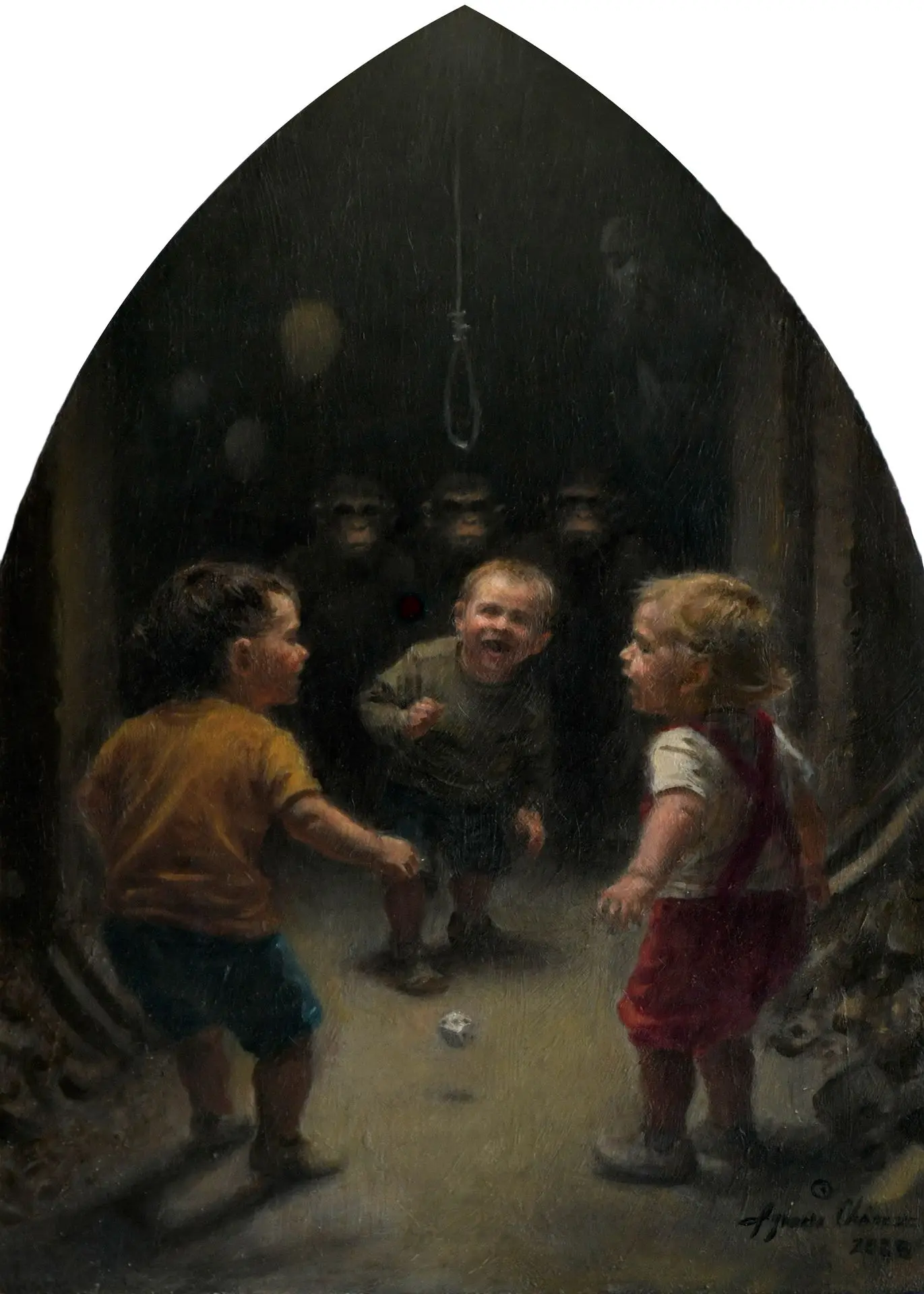
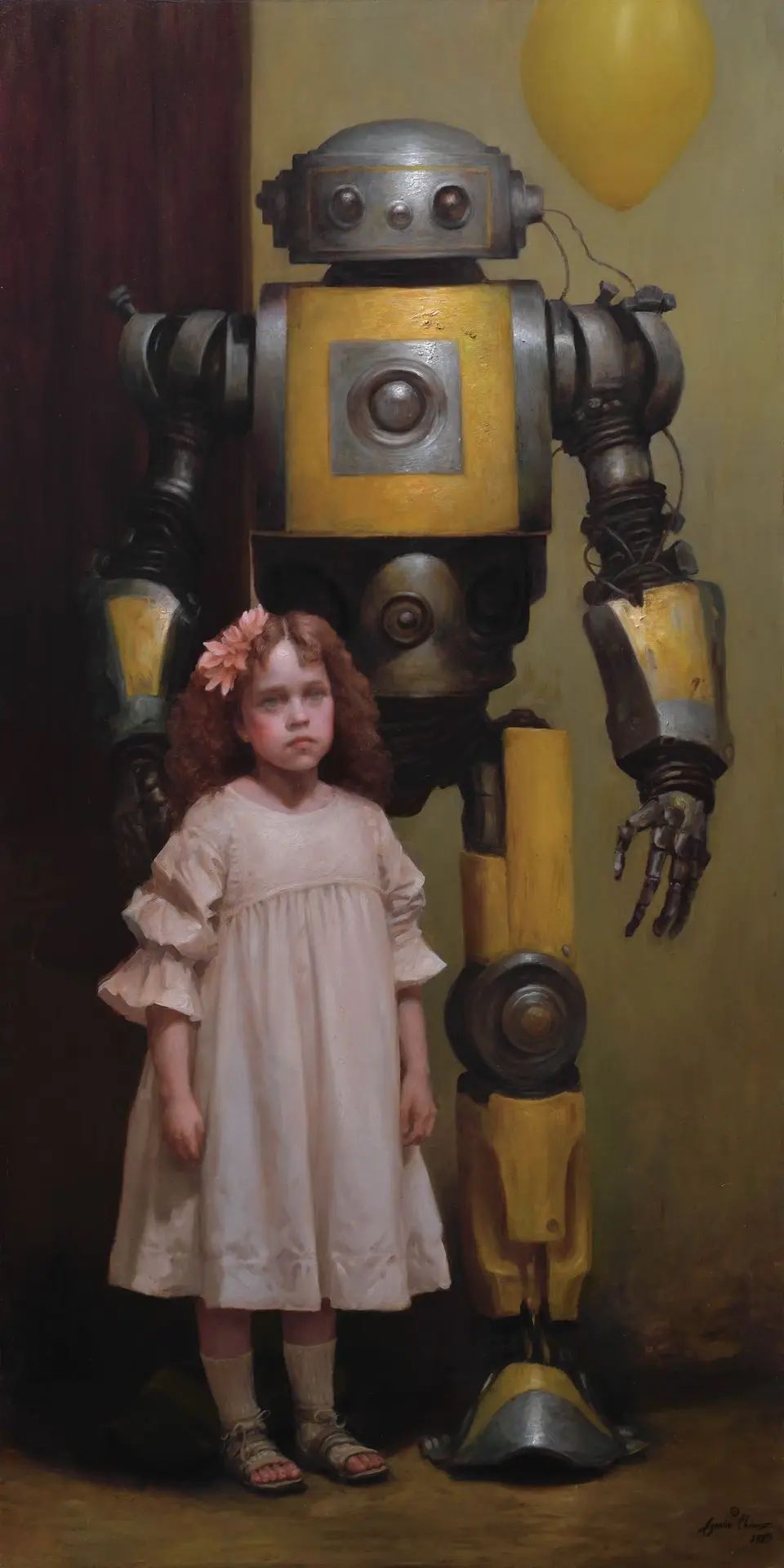
His recent pieces deal with very present-day things, told without an instruction manual. In Google Maps II, a young woman stands lost in the countryside trying to find her way with her phone, something as ordinary as handing your own intuition over to a screen. In Sin filtros, a basket hangs from colored balloons while a baby's hand barely emerges, like that state before all the filters we later learn to read the world through. There are children alongside apes, balloons suspended midair, scenes that mix tenderness with something uneasy. Ignacio says he wants mystery, vulnerability and even a bit of irony to surface, but nothing to resolve completely.
That's why his work behaves differently once you live with it. Some pieces start quiet and grow uncomfortable over time; others begin from something familiar and slowly uncover a tension you didn't catch at first. They look best where there's a pause, good light and room to linger, and they lose their force when they're consumed quickly or hung up as mere decoration. They connect most with people who don't need to understand a painting to enjoy it, but who stay in front of it long enough to inhabit it.
There's a solid track record behind all this. He studied Visual Arts at the UAQ, co-founded and directed the Academy of Realist Art México, and his work has traveled through exhibitions in Mexico and across Europe, as well as spaces like Museo Soumaya. He's now preparing a new series for the Museo de Arte de Querétaro, where he brings together almost everything he's been researching for years: the tradition of academic and Baroque painting, used not out of nostalgia but because it's still one of the most powerful ways to build presence and emotion inside an image.
Ignacio remembers a moment from childhood that explains almost everything. A neighbor asked him to draw a Virgen de los Dolores for his grandmother; he made it in pastel and, when they handed it over, the old woman began to cry and to pray to it. That's when he understood an image could carry enormous weight, far beyond the technical side of it. That, deep down, is the bet his painting makes: not to hand you a closed message, but an image that never quite resolves and makes you stay a little longer, looking.