Mariana Lagunas
Mexican Artist
About Mariana
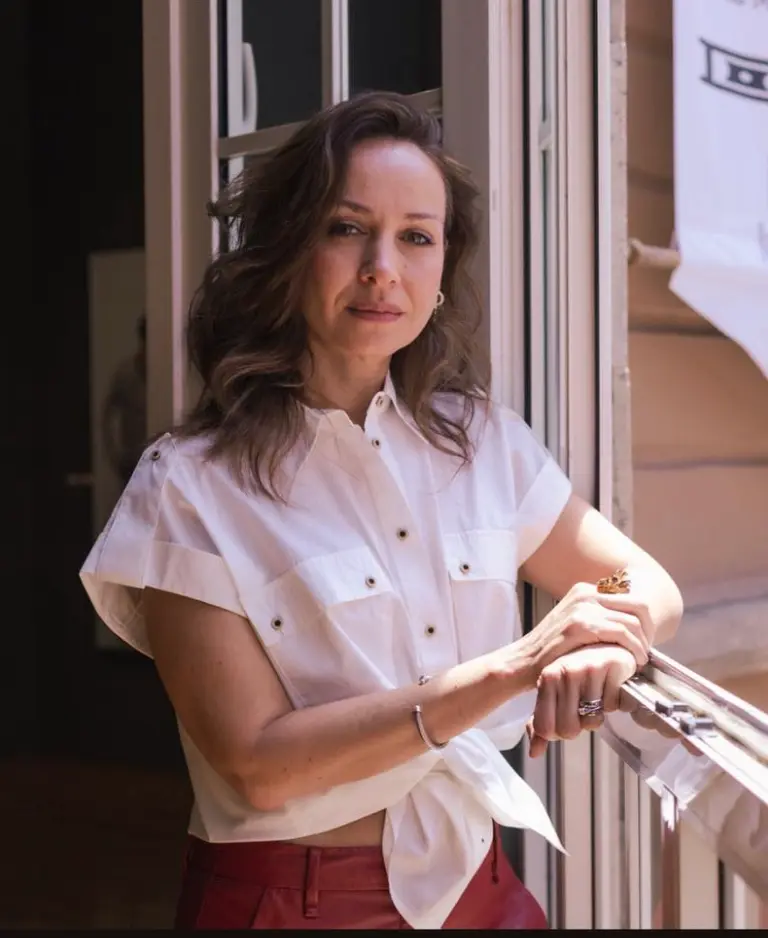
Mariana Lagunas paints out of Culiacán. Oil on canvas, figurative, full of color, never monochrome. What she really does is take what she sees and lives day to day and pare it down to simple images. Her work has always circled two things that seem like opposites but live side by side: optimism and frustration. She's a little obsessed with being clear without forcing anything, because what each person feels in front of a piece isn't hers to control, and she likes it that way.
She came to this late, and almost because other people pushed her. She had painted since she was a kid without realizing it could be something serious. Before, she ran a party-dress business and a jewelry studio, studied Business at the Tec, and she is a mother of five. When the kids grew more independent the room opened up, and about ten years ago, during an art week in Mexico City, it finally clicked: she visited studios, met gallerists and collectors, people who had not even studied art, and realized she already had plenty to say and was running late on saying it. It was others, further along the road, who convinced her she was ready.
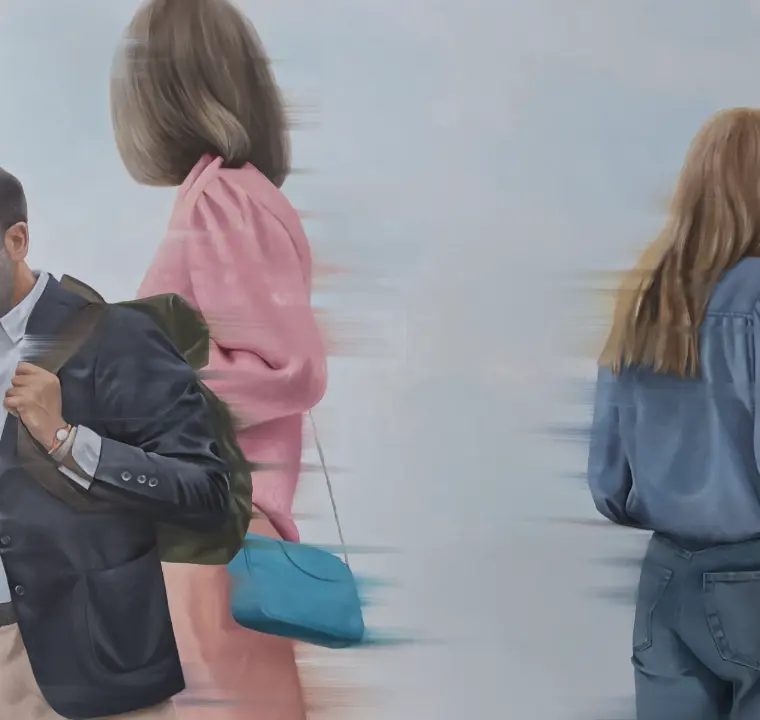
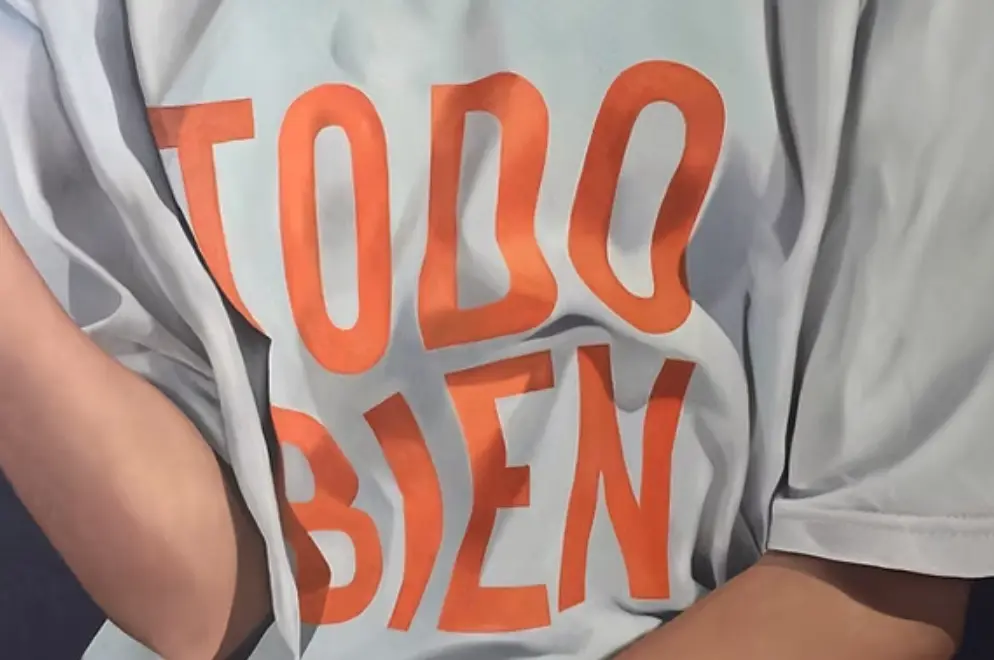
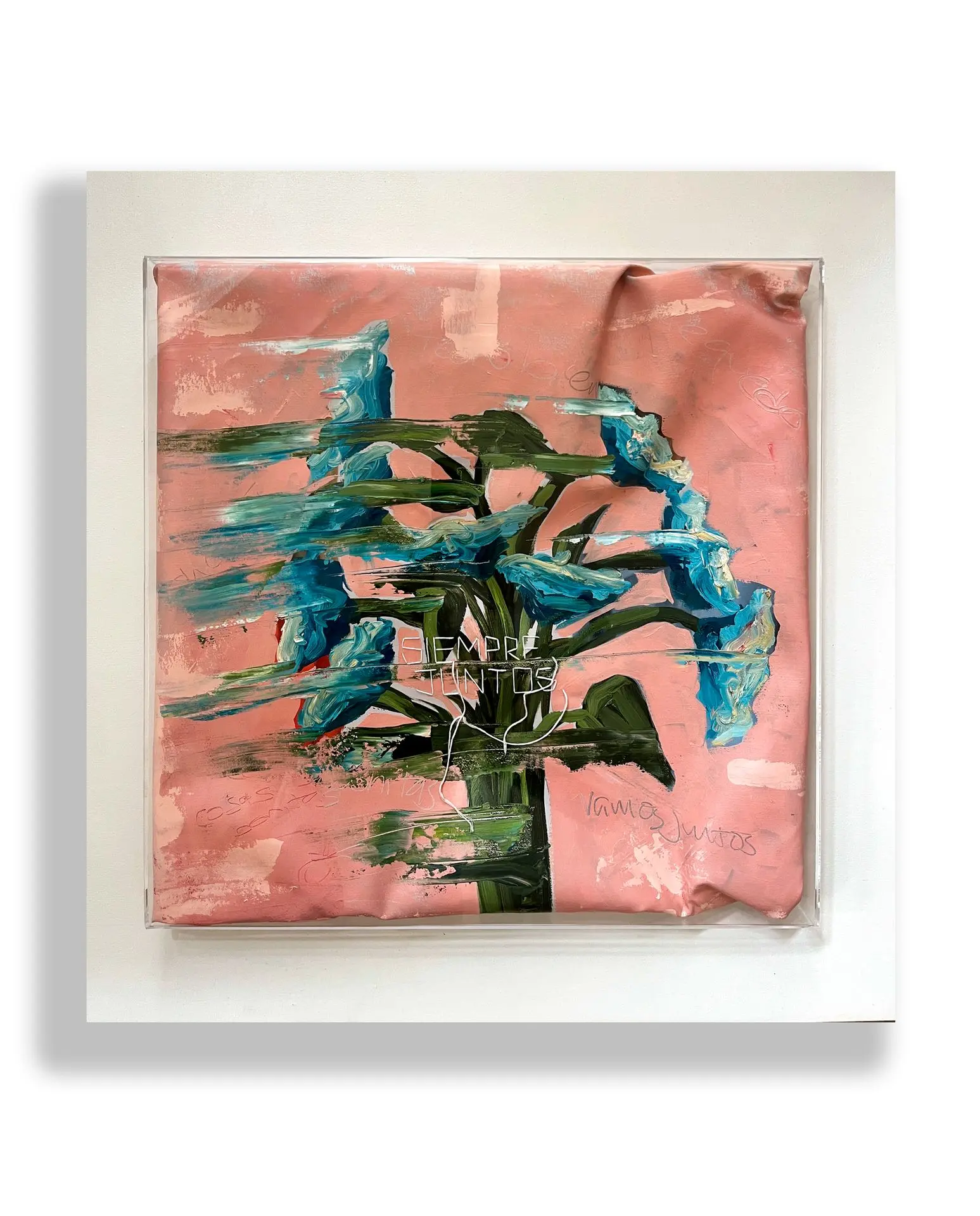
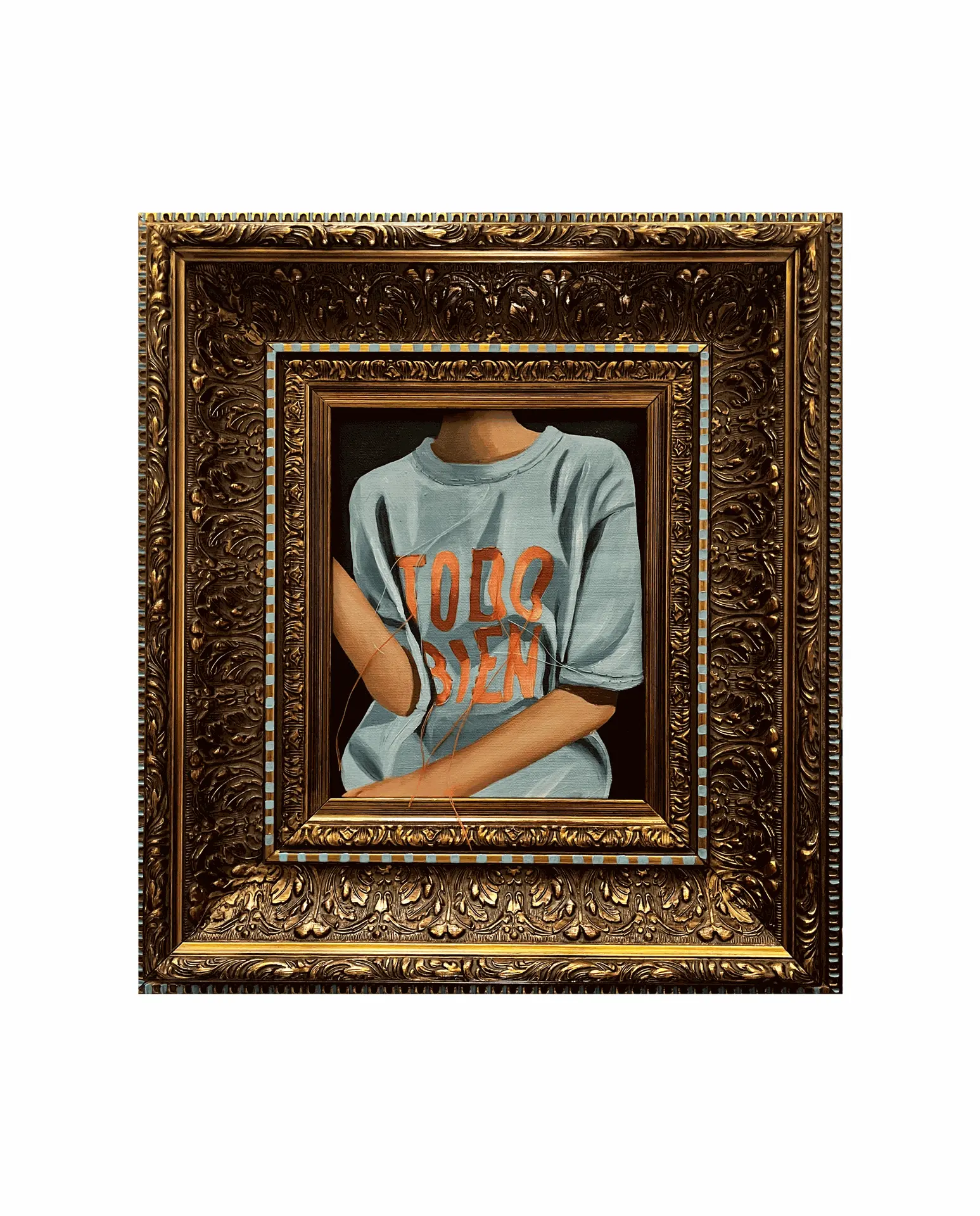
Her process starts on her phone. She documents whatever catches her eye, scrolls back through the camera roll again and again, saves images for their color balance alone even when they have nothing to do with her own work. She cuts up and collages old pieces to build new sketches, adjusts colors and formats, and when something grabs her visually she lays down the lines and starts painting. She works on several pieces at once. Her visual language carries traces of Alex Katz, Gerhard Richter and David Hockney, the flat planes, the color, the way of looking at everyday life, and every so often concrete turns up, that material she picked up from an engineer father and an architect husband and that resurfaces in her sculptures.
People who live with one of her pieces tend to write to her. They send photos of the framing, of the wall, of the work hanging in the middle of a family gathering, and sometimes they get vulnerable and tell her what it feels like to have it close. These are intimate pieces, made for interiors and directed light, that end up in the private corners of a home rather than on just any wall. People connect because they recognize what they are looking at: they have lived it, or they are living it now. It is the idea of having something in front of you that reminds you everything is okay, in spite of. Her collectors tend to be emerging ones, between 30 and 60, and it flatters her when one of her pieces ends up sharing a room with work by long-established artists.
In 2025 she showed at the Consulate General of Mexico in New York with an installation of paper bags printed with optimistic phrases. Mariana says that, right after her talk, the Consul took the microphone and explained that this same room had once held more than three hundred and sixty urns of deliveristas, Mexican migrants who died of covid and were repatriated home from there. She had no idea. Without meaning to, her installation had become a tribute. In the same show she hung paintings of people in motion, and visitors kept agreeing that this was exactly how they were living, seeing themselves in the figures even when they looked nothing like them. There were curators and collectors in the room, and also people with no connection to art at all, feeling the same thing. What Mariana is after is pretty simple: that someone comes across one of her pieces and understands, all at once, that they did not know they needed to see it. And that it keeps echoing long after, something of hers on the other side of the world, for when she is no longer around.