ROBERTA
LOBEIRA
Artist
About Roberta
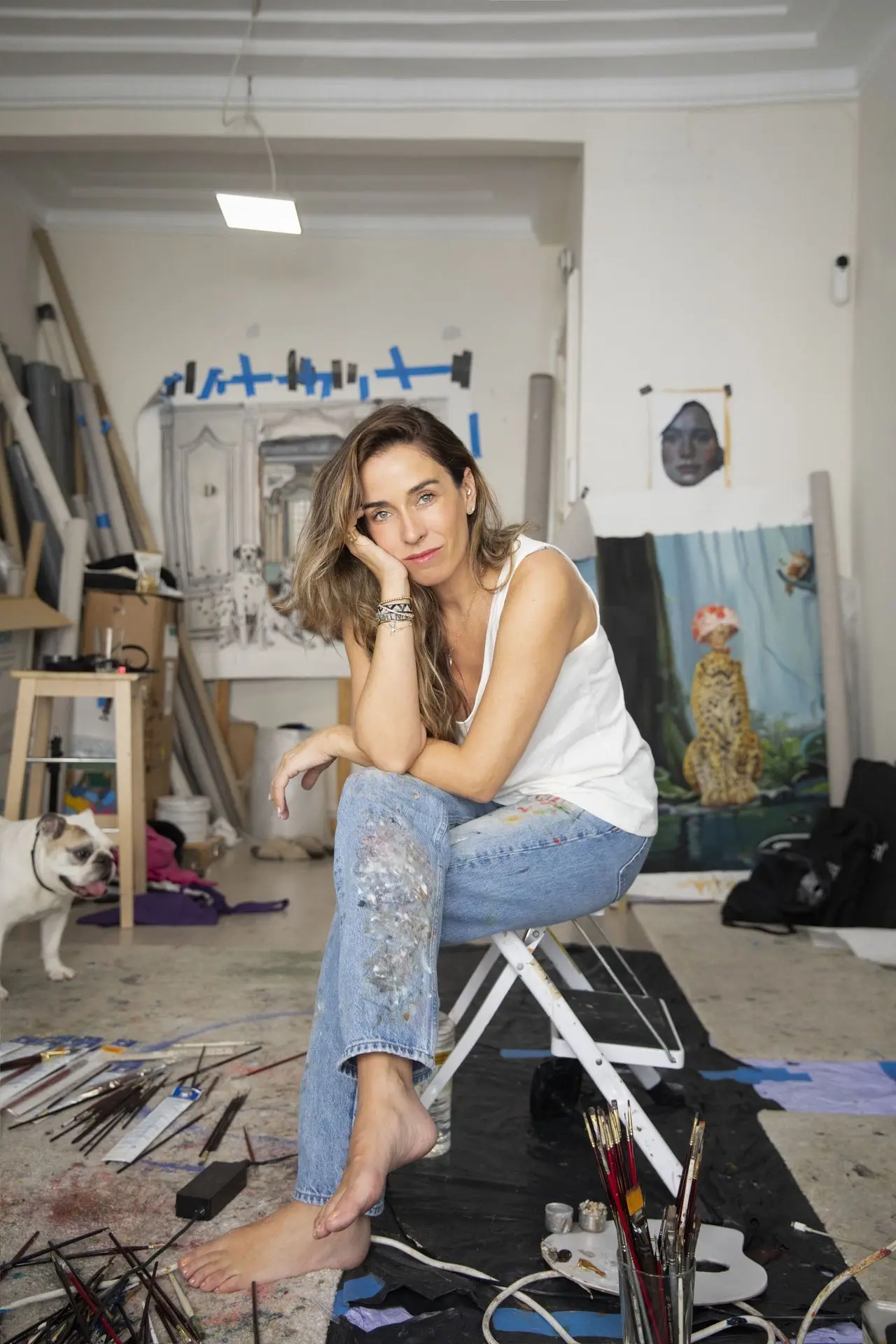
Roberta Lobeira sold her first painting at the age of eleven. Her mom had a flower shop at home, and every time someone came to see the flowers, Roberta managed to get them to take a portrait as well: of their children, of their dogs, of whatever. It’s not a calling she discovered later in life. She grew up painting, started with comics because she wanted to do animation and dreamed of working at Disney, and her finished paintings hung all over the house, as if she were the next great artist. That certainty that this was her thing never had a starting day. It was always there.
What she paints are animals, almost always, although not in the way a naturalist would paint them. She paints them as they appear when imagination comes into play: lions, creatures, characters that live on the border between the real and the non-existent. She grew up surrounded by animals; her dad was a hunter, and at home, they talked about the ranch and wildlife documentaries, and she ended up doing just the opposite of hunting. She likes to see them alive. Painting them is her way of getting to know them better and paying homage to their beauty. From there come worlds where fantasy and vulnerability fit together, a kind of archive of memories safe from the passage of time. She is interested in surrealists like Dalí, Meret Oppenheim, Guillermo Lorca, and that kind of fantasy that also breathes in Guillermo del Toro's films: magical places that one enters when they set aside, even for a while, the ordinary.
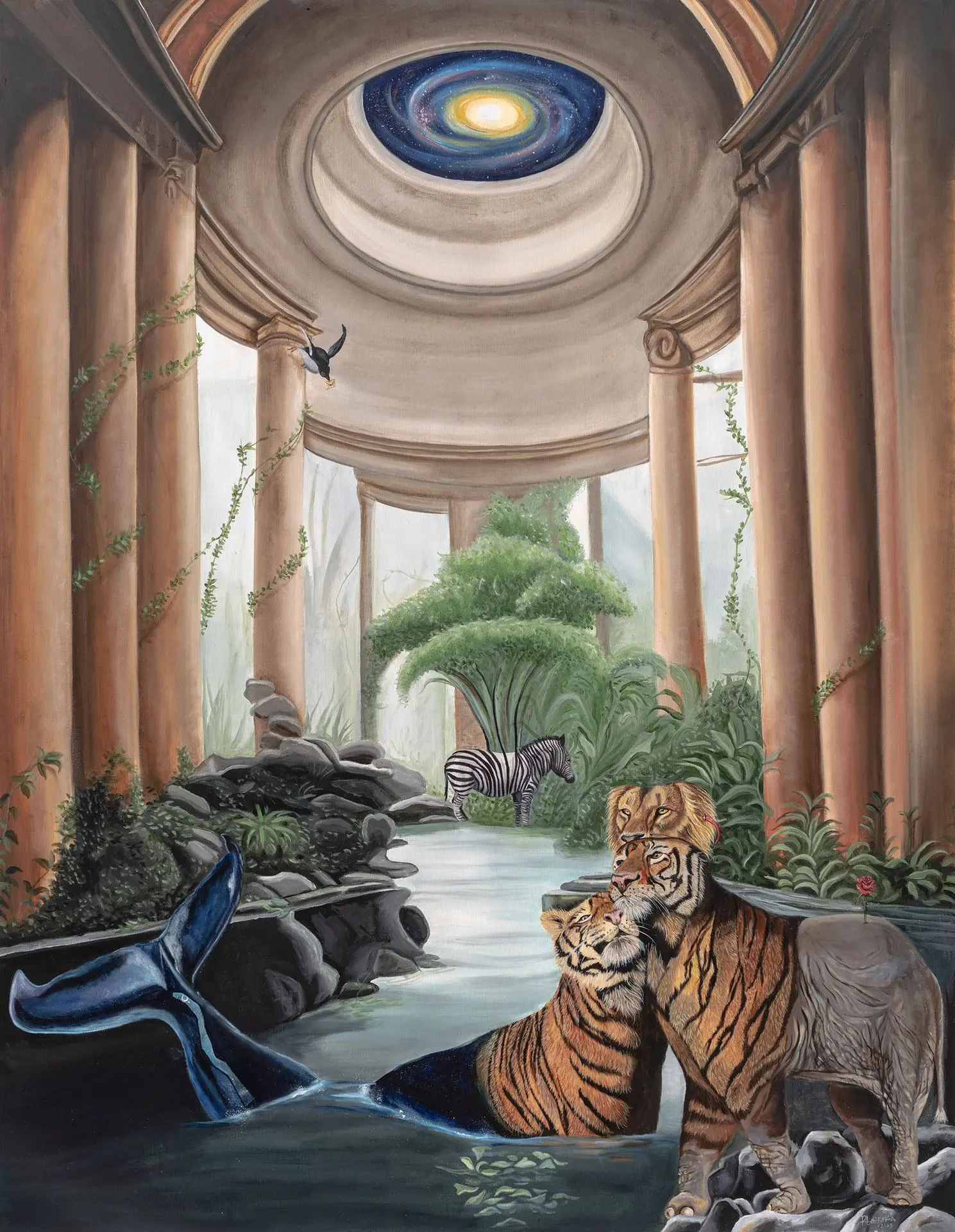
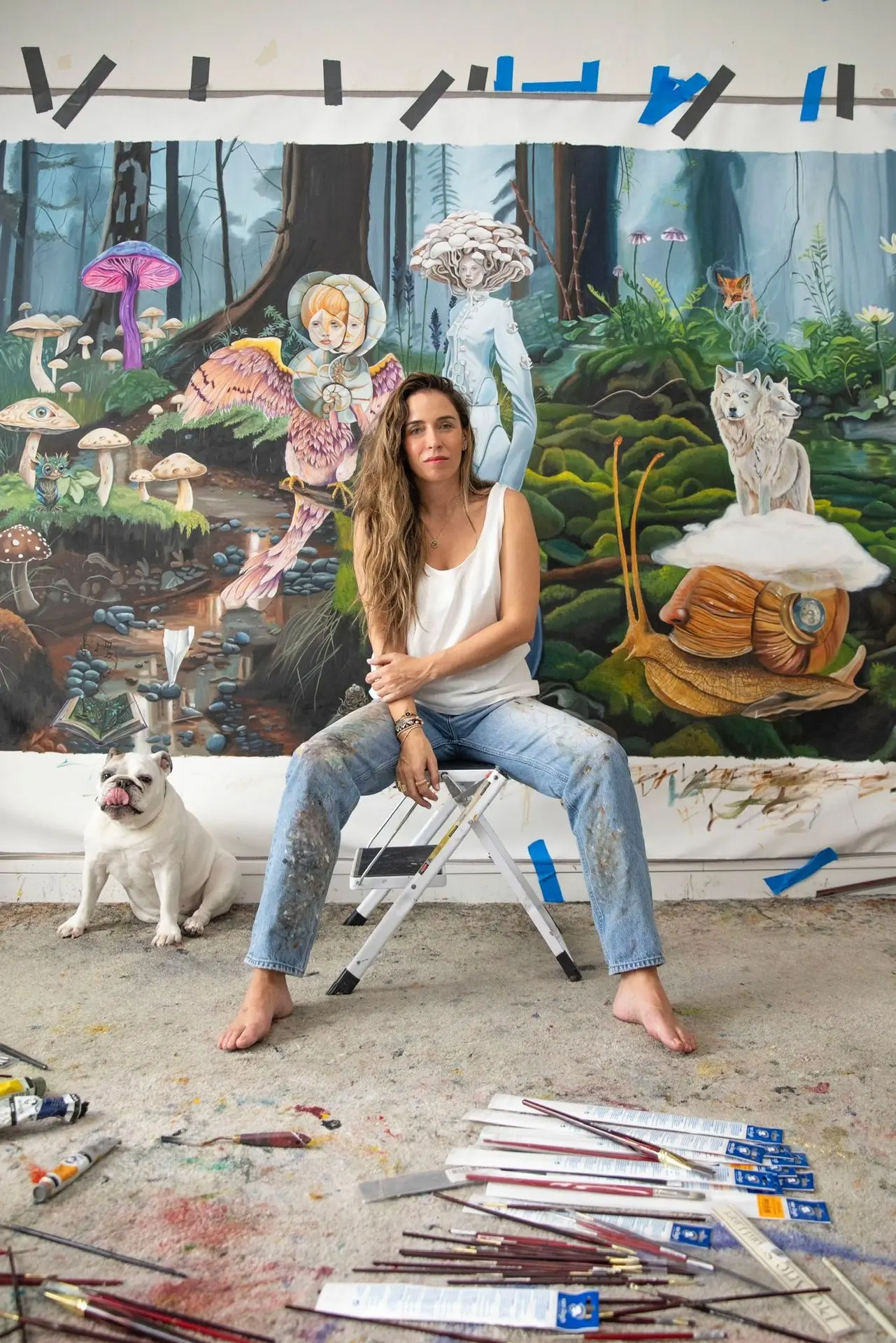
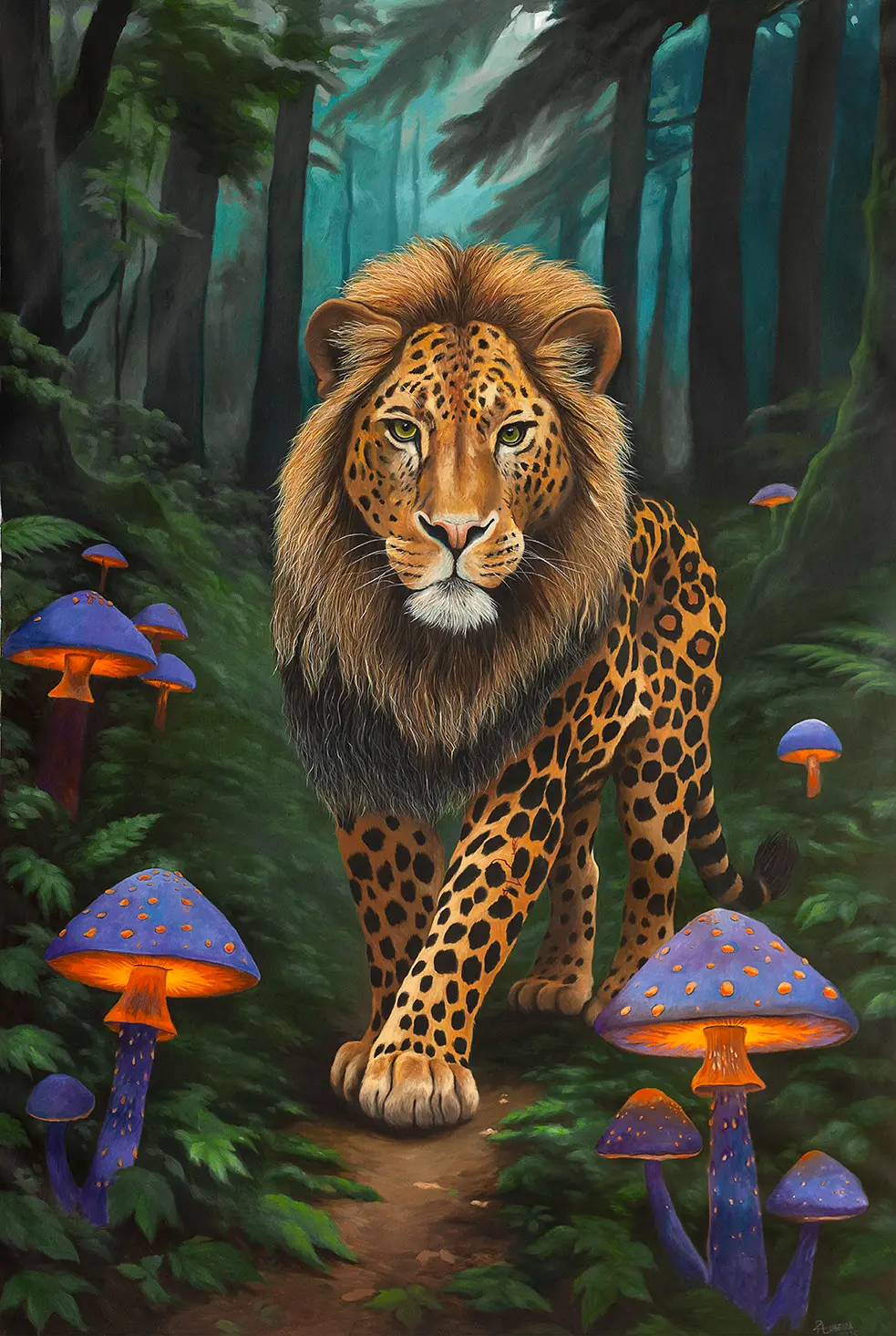
A piece starts with a doodle. Roberta quickly sketches the idea, without detail, just to get it out of her head and see it. Then she dives into searching for images and reviews hundreds until she understands exactly what she wants, and there, she says, is the magic. If a lion is going to appear, she decides how the story needs it: the gaze, the pose, roaring or completely calm. She has always worked in oil on canvas; she tried everything along the way, but it's the technique she likes the most. Lately, she is also exploring bronze sculpture.
There is a story she tells from when she was a child. Her mom took her to see an important gallery owner of the time to show him what she was doing, and the man told her that she had a lot of talent, but that she wouldn’t dedicate herself to this: that she would end up like her friends, married at twenty, painting on Sundays. That phrase haunted her for years. Over time, it ended up being useful: she learned that if she wanted to pursue this seriously, she had to put in a lot of time, and that without that dedication, talent means nothing. The worst possible advice, given in the worst way to a child, and yet it ended up being fuel.
She studied in many places: Monterrey, Paris, Oaxaca, with Marco Antonio Bustamante, but it was in New York, at the New York Academy of Art and the School of Visual Arts, where she feels something fundamentally changed. Her classmates were real artists, as were the teachers, and her technique grew there more than anywhere else. She continues to surround herself intentionally with creative people: musicians, painters, actors, writers. Being close to them, she says, nourishes her own creativity.
Her last two solo exhibitions clearly indicate her direction. One was at the Pinacoteca de Nuevo León, featuring work from twenty-five years ago; Roberta mentions that she was the first woman to exhibit solo there and that they broke the attendance record. The other was in a gallery in downtown Zurich: the gallerist had seen her work at a fair in Miami, it happened that Roberta was in Gstaad where the gallerist also has a space, and from there, a year later, the exhibition came to be. Before all that, something even stranger and bigger had happened: one of her works, the one about the house of flowers, went around the world. Roberta shares that it was printed in many languages, that it became a kind of cult object, and that even today, years later, people still write to her from all over.
She is now gathering work to exhibit again, this time in Mexico City, after years away. The series she is working on speaks of ephemeral beauty, fragility, loyalty, and the things left unsaid. And there is one thing she prioritizes above any commission: the freedom to paint what she wants. She knows she has been lucky in that regard, as not all artists have it. But part of why she is sought after by both very young people and lifelong collectors is precisely that: no one comes to Roberta Lobeira asking for the painting they already had in mind. They come for the worlds that only she can imagine.