Roman de
Castro
Mexican Artist
About Roman
Román de Castro started painting almost by accident. He was a journalist, stuck inside during the pandemic, and one night, out of sheer boredom, he began messing around with a medium that had been a stranger to him his whole life. It wasn't a gut feeling or anything romantic his words: he saw a viable opening and took it. The romantic part came later, when he realized he could spend the rest of his days making things. And although painting was the new arrival, writing had been there all along, and it's still intact, the center everything else hangs from.
That's what sets him apart: Román is a writer who paints, and many of his pieces carry words. When a work has words in it, he says, it's hard for it not to reach you directly. So what he protects above everything is the writing. He has two rules he won't break: he doesn't write in English, and he doesn't write anything that didn't come out of his own head. In a field full of commissions with words made to order, his are his and that's that.
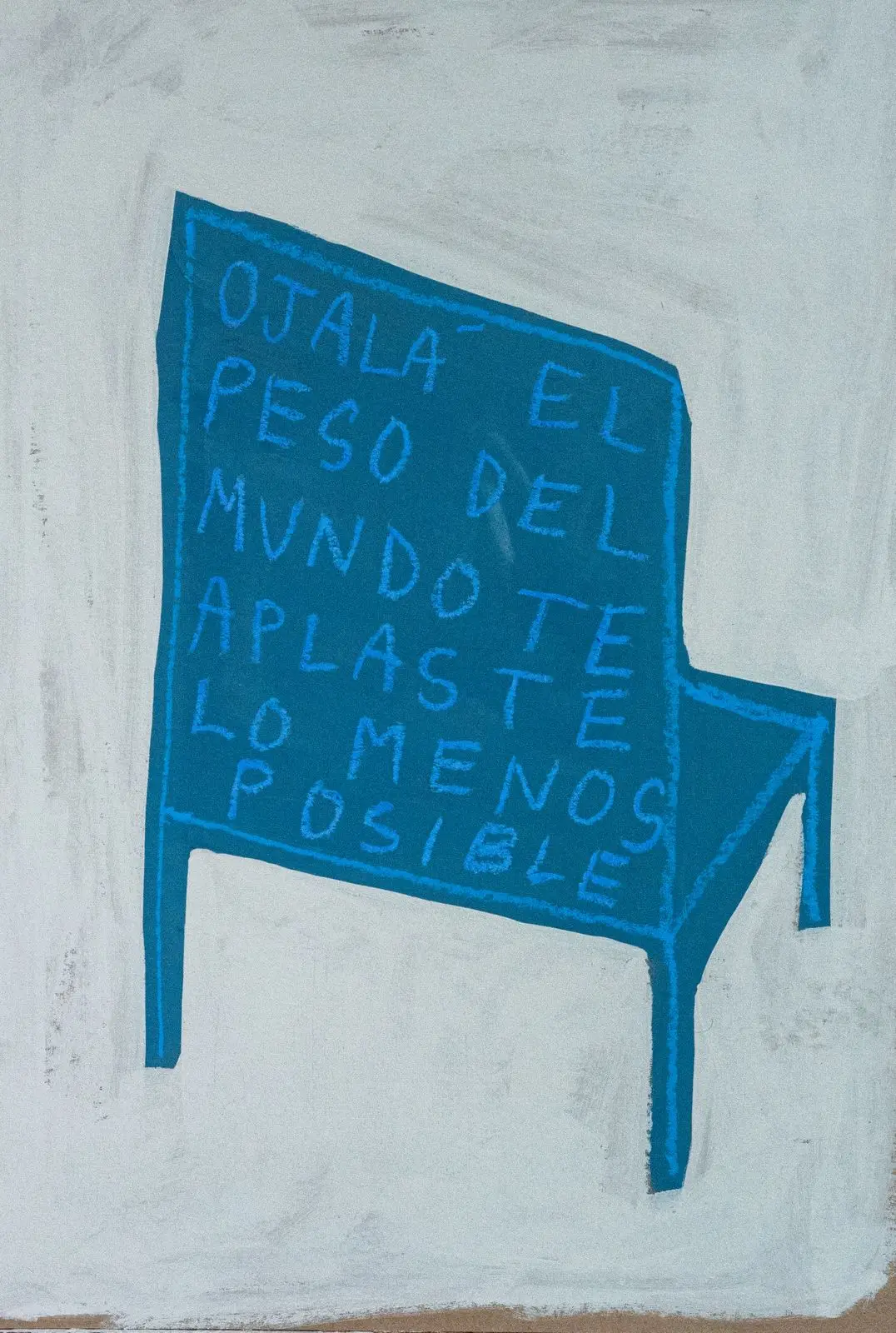
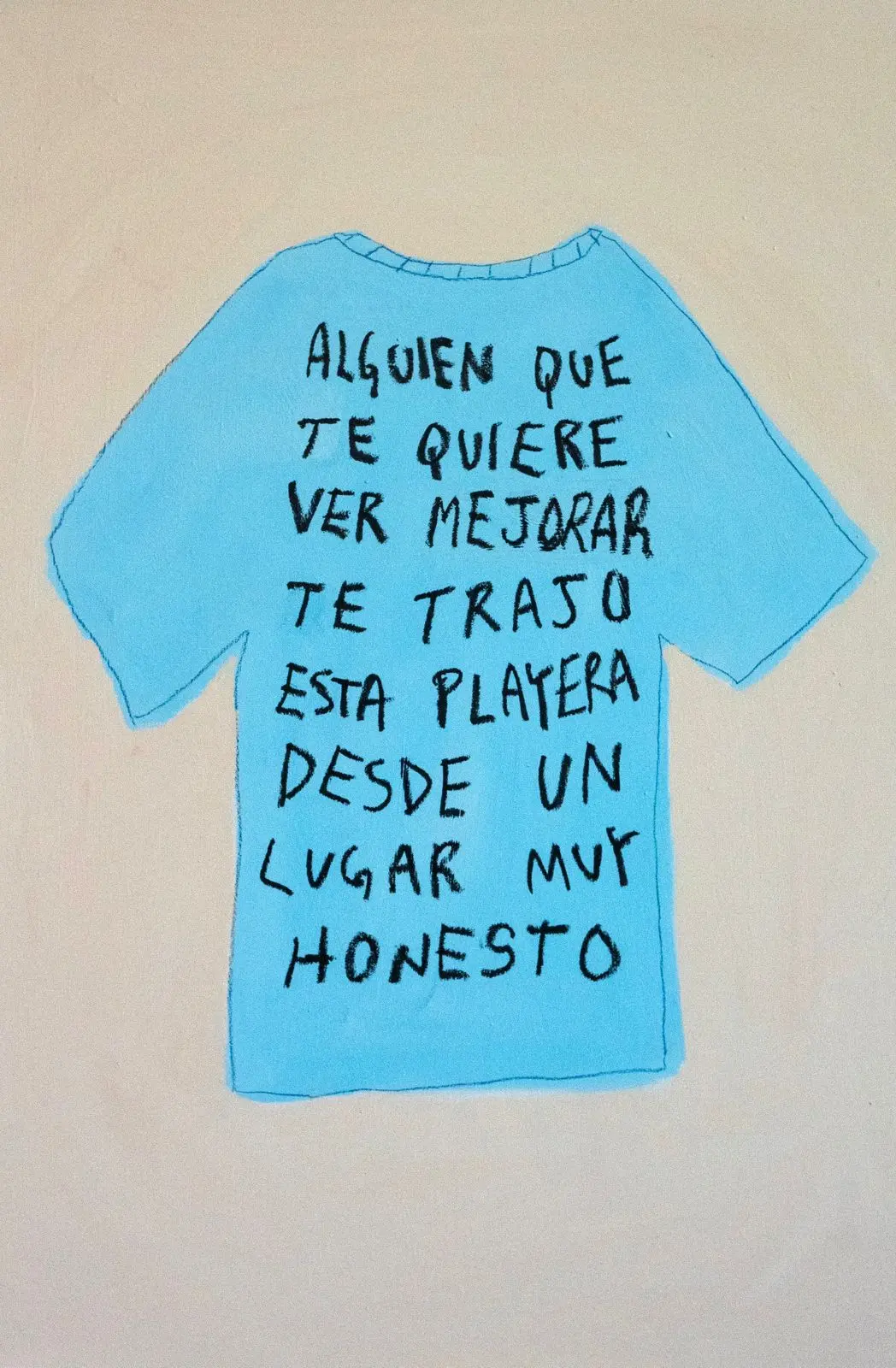
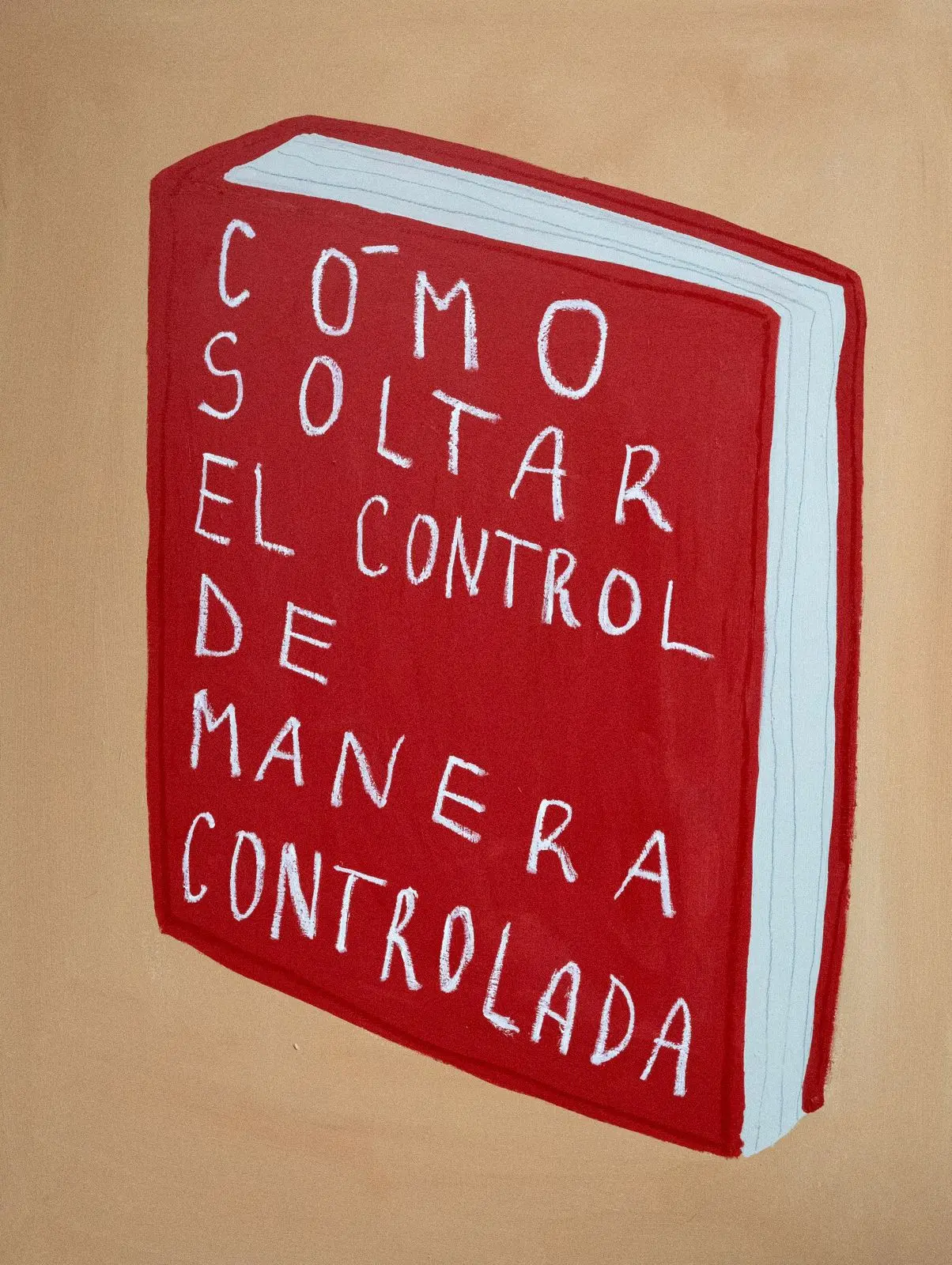
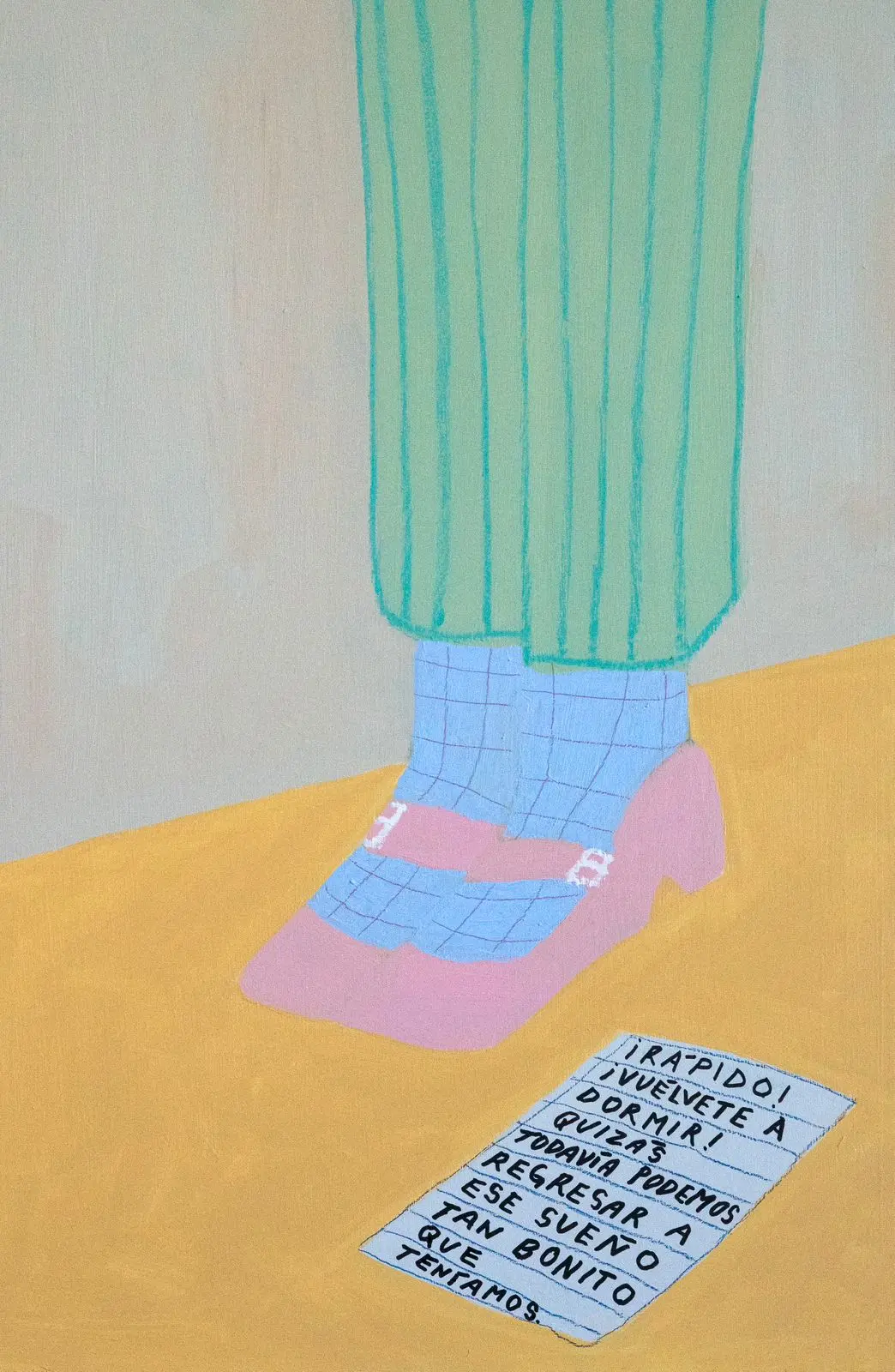
What he's after, in one line, is the capacity to feel and the fight against time he has a lot to say and it nags at him that he might run out of it. He works mostly in acrylic mixed with dry technique, and in high-fired ceramic. He doesn't demand any particular setting for his work: it sits just as easily in formal spaces as in casual ones. He isn't interested in dictating what you're supposed to feel in front of it he'll tell you nobody should feel anything at all but if one emotion keeps coming back when someone lives with a piece, it's nostalgia.
He never studied painting. He started film, journalism, and arts management, and didn't finish any of them all in Mexico City so he came to the canvas with no school and no borders. His references say a lot about where he's looking: the color and the moods of Pedro Almodóvar, the ambient music of Ryuichi Sakamoto playing while he works, and the poetry of Mary Oliver, which nudged him to publish his own book of poems. In 2025 he won the acquisition prize and residency at Piramidón, in Barcelona.
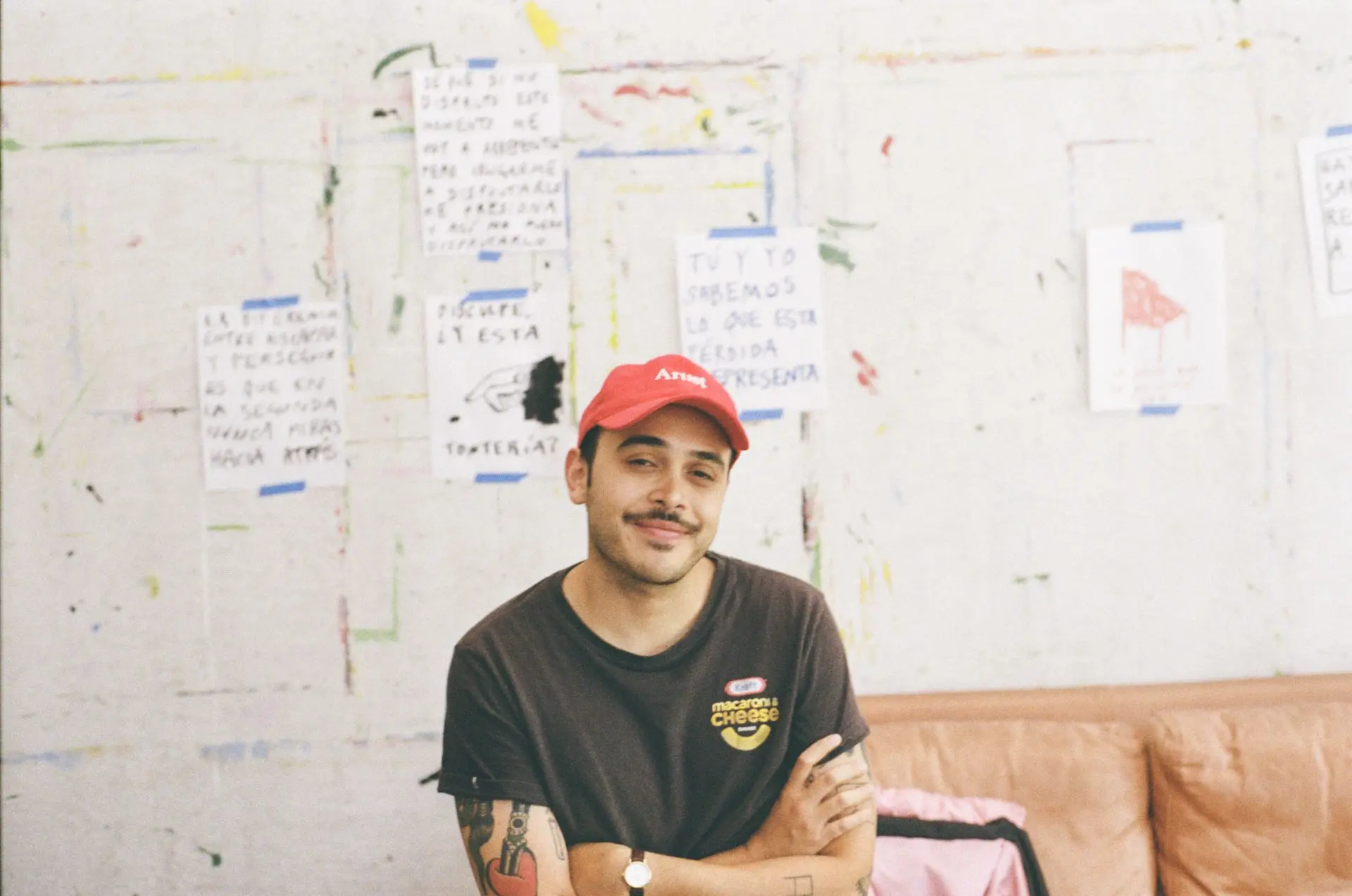
His first solo show was in a small gallery in Roma, in Mexico City. Román recalls that it filled up overnight: people lined up to get in and kept coming back, and over three months more than a hundred thousand of them passed through. That was when he thought maybe this was worth it. Since then his work has shown at Salón Acme, Zona MACO and Canart Madrid, and in solo shows in Medellín and Barcelona. Almost everything is original only the graphic work is produced in series each piece signed on the back and with its certificate of authenticity.
After two years at full speed, he's now in a deliberate pause. For the first time he has almost nothing on the horizon, and nothing excites him more than that stillness, the room to figure out what he wants to do next. The one thing on the calendar is «Fuerzas básicas», a show about soccer he's mounting at the Westin in Santa Fe during the World Cup: a love letter to a sport he's followed for as long as he can remember (and, for the record, he's Chivas to the core).
He connects most with younger people, though more and more his work is read across ages and professions. And what he wants understood, when someone comes across his work for the first time, is simple: that it's honest and direct, no detours.