Zoe
Lunar
Artist
About Zoe
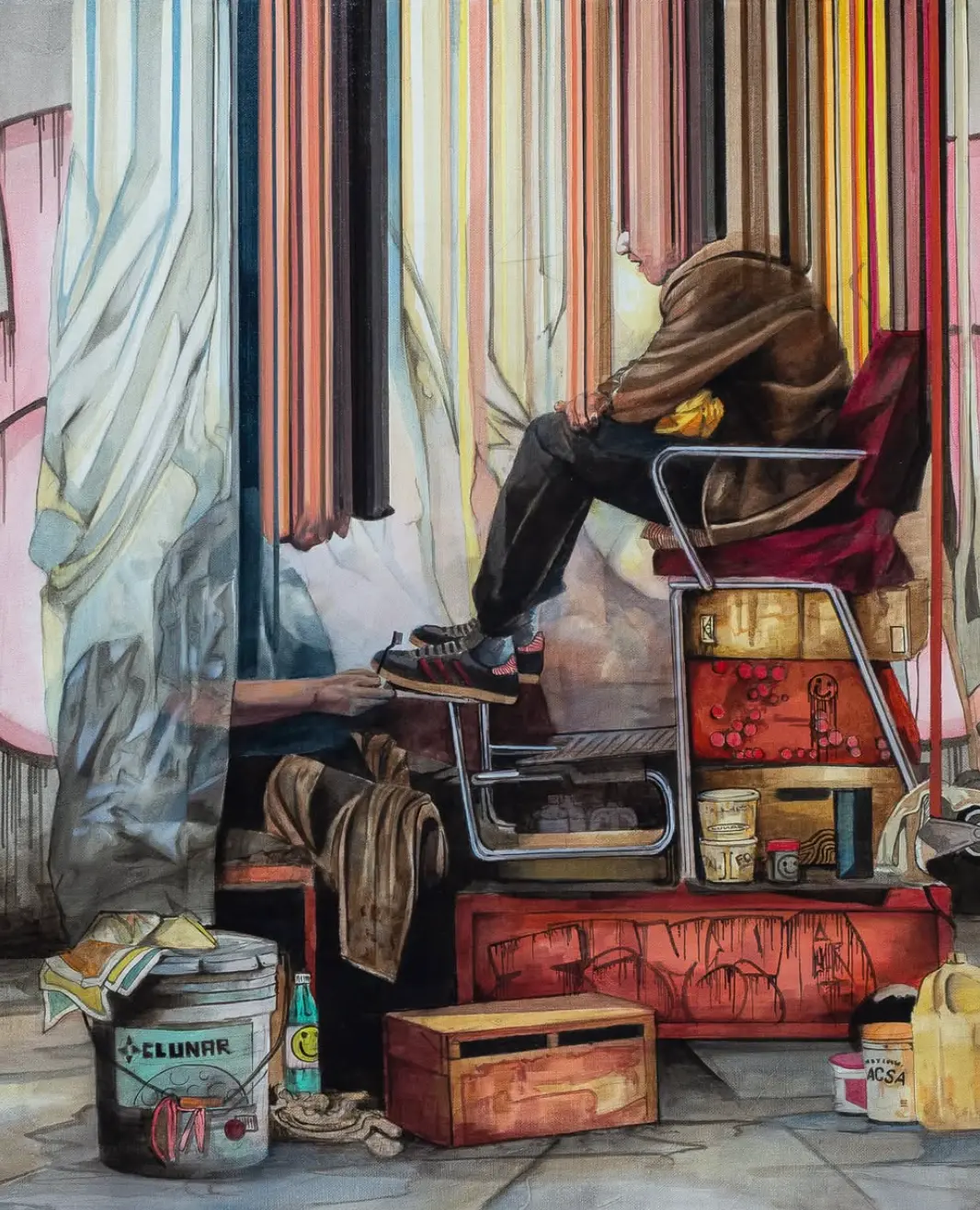
Zoe Lunar paints places anyone would recognize a metro corridor, an empty street, a city corner at a certain hour but he paints them at the exact moment they start to move. The scene is still there, you can still place it, and yet something has already shifted: a line that slips, a color that escapes, a fragment that won’t quite hold still. What interests him isn’t the place so much as what time does to the place and to the people who live in it.
It almost always starts on an ordinary day. A commute, a conversation, some particular feeling while he’s walking through the city. He takes photos, jots quick notes, makes small sketches, but the piece begins long before he touches the canvas: he lets the image stay with him for a while and watches what survives in memory and what starts to warp. That’s why he works in oil. The drying time lets him build slowly cover, correct, destroy parts of the image and start again on top until the painting holds onto something unstable, as if the scene were happening in front of you and not entirely finished.
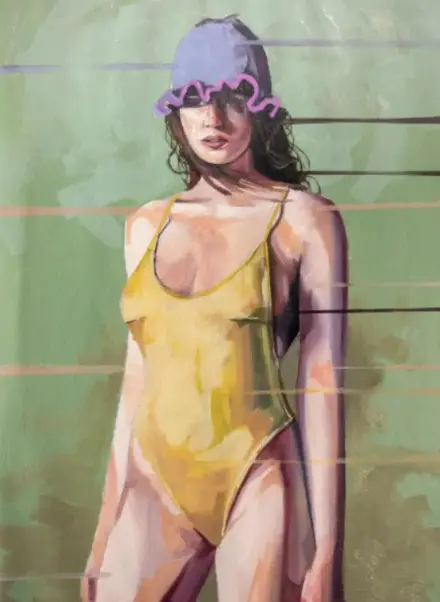
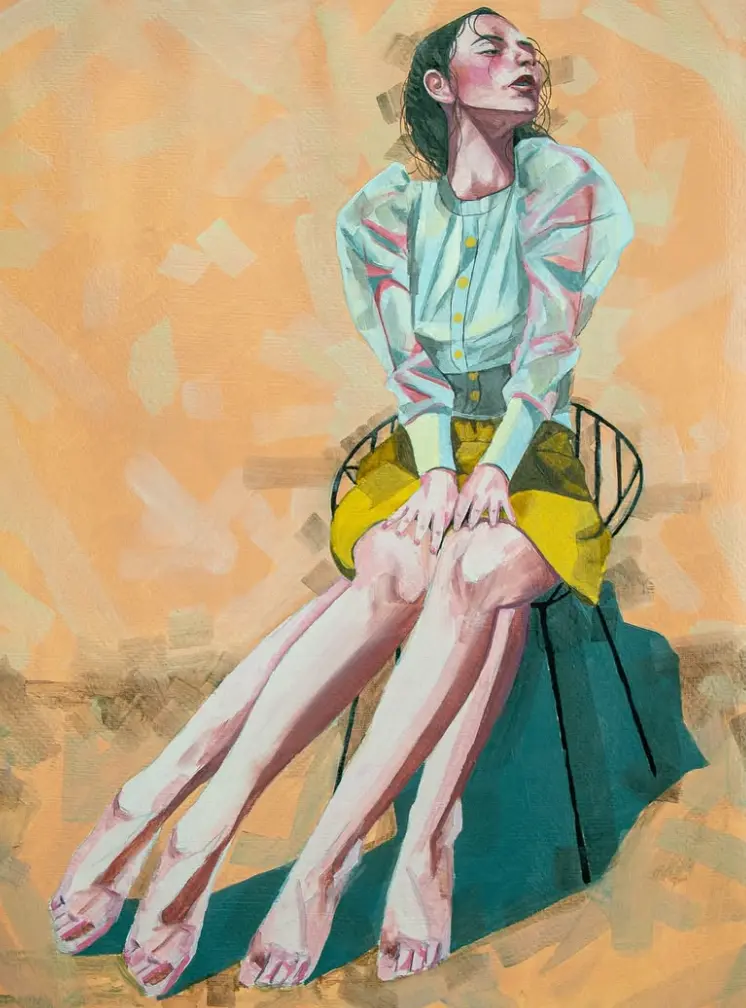
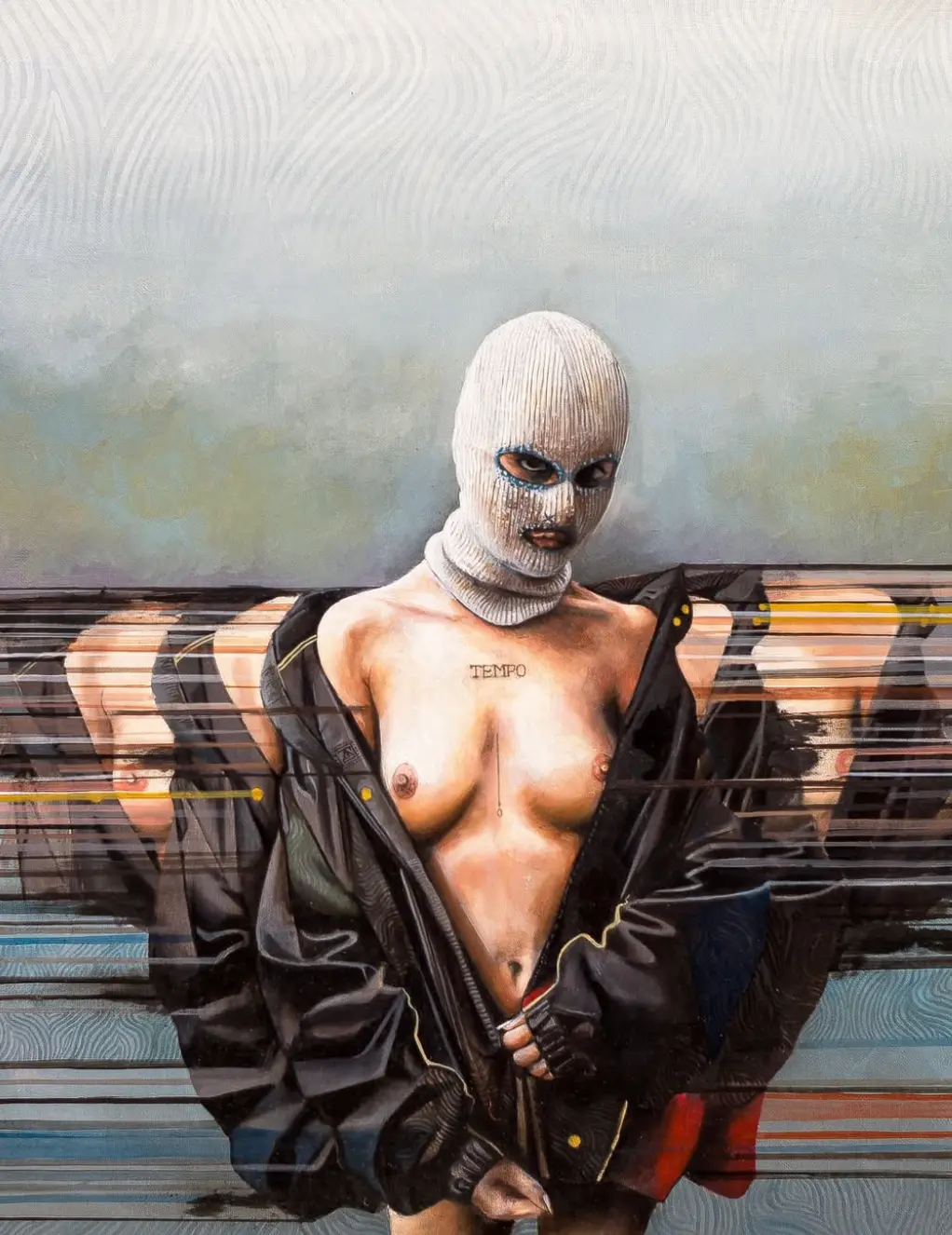
He came to painting through his father, who used to draw. As a kid he’d sit and watch images appear out of nothing but a pencil and a sheet of paper, and he ended up copying him almost without thinking. Then came the drawings in the backs of notebooks during classes that didn’t interest him, courses at FARO de Oriente, the UACM, and a stubbornness that says a lot about how he works: La Esmeralda the national school of painting, sculpture and printmaking turned him down three years running before he got in. He graduated from there and, at some point, went on exchange to the Accademia di Belle Arti di Macerata, in Italy. Zoe says that even in his worst moments he kept painting all the same, and that’s where he understood this wasn’t a hobby he came back to when he had time, but the way he kept his head in order.
His references help locate where he’s looking. Gerhard Richter, for the blurred image treated as something emotional and temporal, not just visual. And Marcel Duchamp, for an idea he takes seriously: that a work doesn’t live only in its technique, but also in the way whoever looks at it finishes it off. Which is why he protects the ambiguity of his images so carefully. He’d rather take longer on a piece than simplify it to make it easy to consume, and he leaves room, on purpose, for each person to inhabit it on their own terms.
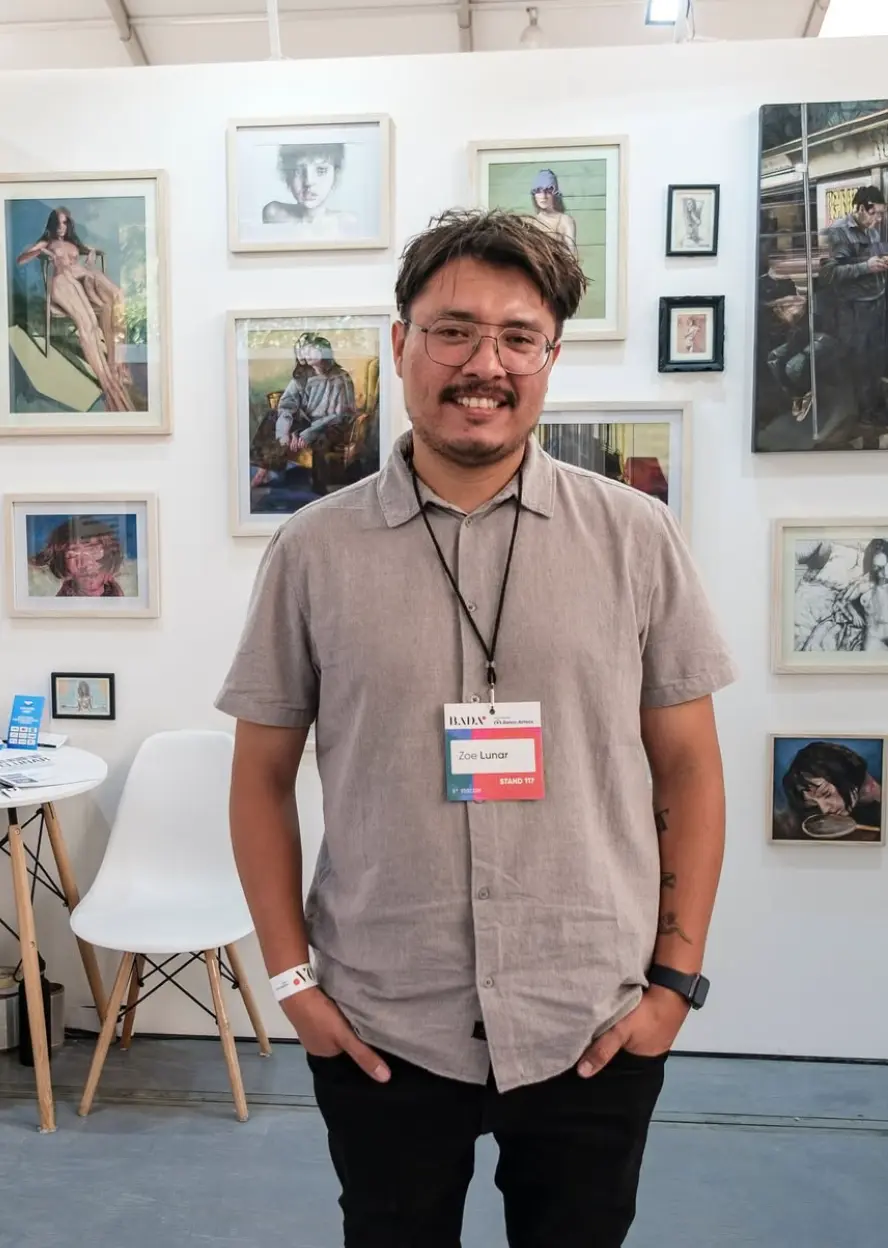
That explains what happens when someone lives with one of his pieces. At first you see a scene, a figure, a concrete place; over the days other layers start to surface movements, absences, fragments you hadn’t noticed. The work doesn’t wear out fast. Zoe says someone once bought a painting of his made from a metro corridor and wrote to him later: they saw it every day before leaving the house, and it had changed the way they looked at their own daily routes. They told him something very simple that now even the most routine places seemed to hold layers of time. It stuck with Zoe, because that painting had come out of an ordinary day, tired, on his way home.
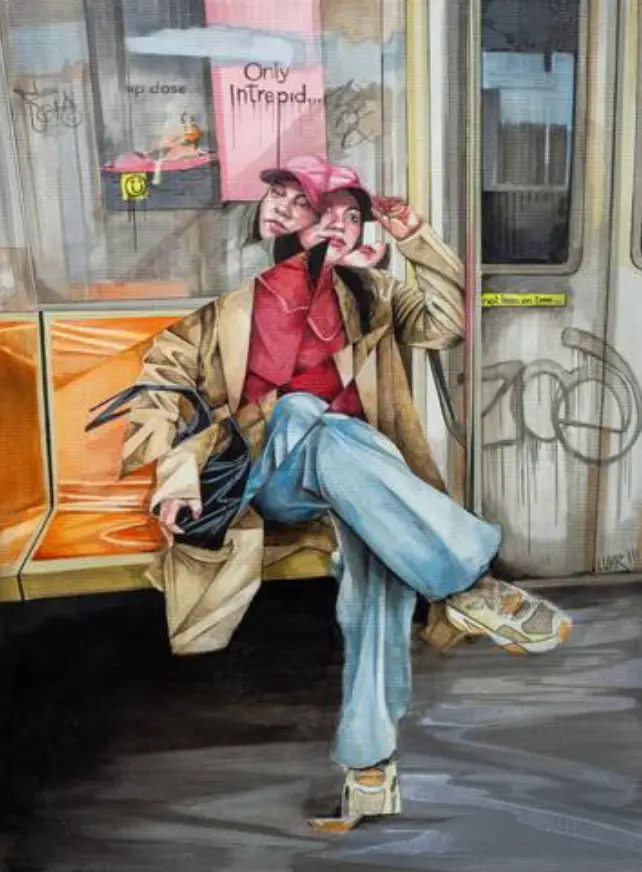
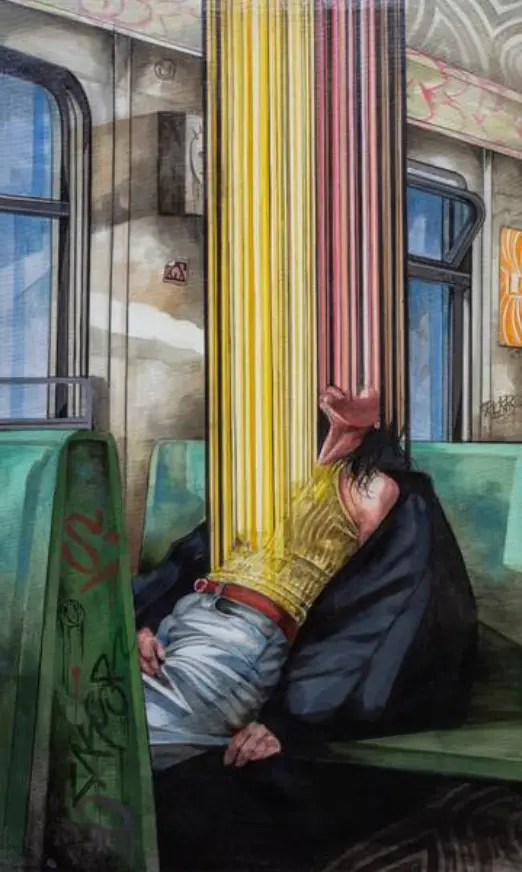
The work needs room to breathe: clean walls, distance to take it in, natural light that lets the variations in color register. It loses force when it’s hung as quick decoration in a crowded space. It connects most with people who live the city up close and have a relationship with time, memory and routine and with younger collectors after contemporary work that carries conceptual weight but stays emotionally close. His work already moves in those circles fairs like BADA, spaces like Ex Teresa Arte Actual and the Museo Soumaya, private collections inside and outside Mexico, from the United States to China, Germany or Belgium. Right now he’s working on new oil-on-canvas series around urban spaces and figures in transit, pushing that fragmentation of time a little further, and he’s begun folding video, sound and digital experimentation into the way he builds an image. Painting is still the center; what’s changing is that he now thinks of it as something expanded, tied to the way we look at things today.