Magaly
Sanchez
Artist
About Magaly
Magaly Sánchez is a Peruvian painter who has spent years painting bañistas women in swimsuits, in feminine, tender compositions and who turned that collection into something almost infinite, on canvas and on paper. She paints in acrylic for its speed, but her training is in oil and impressionism, so in her hands acrylic behaves like oil: color built in layers, a slow burn, a sweetness you don't see in other hands. You look at her bathers and think oil, even though it isn't.
She started very young, just out of school, at a hard economic moment for her family and during years of terrorism in Peru, when devoting herself to painting was about the most reckless thing she could do. She still entered university among the top of her class, studied painting for five years, and left when the household accounts demanded it but she never stopped painting. The first canvas she ever sold was a study of flowers that turned out, without her trying, surreal. From then on it was discipline: waking up with the weight of what needs to move forward, and always a new idea waiting.

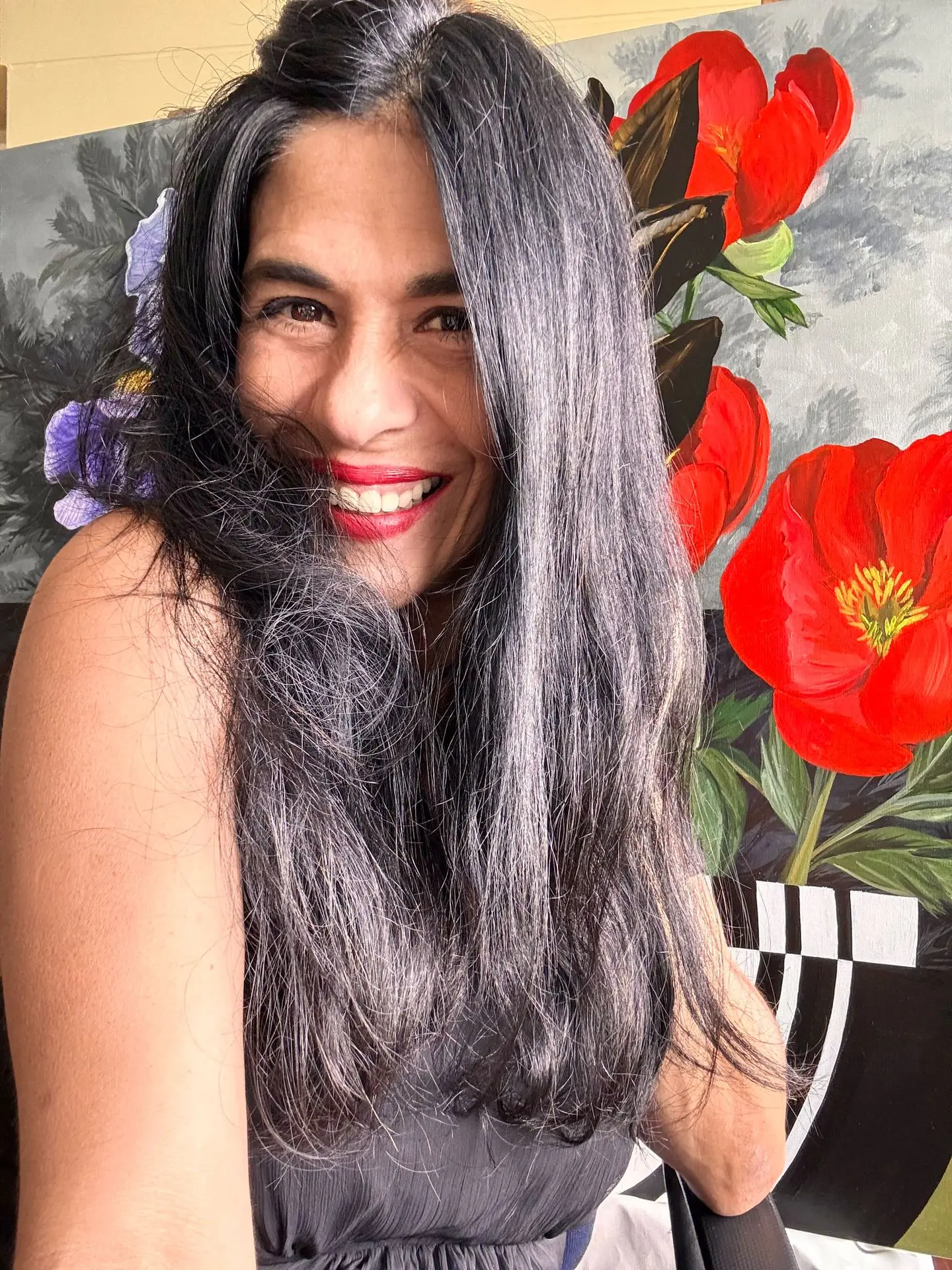
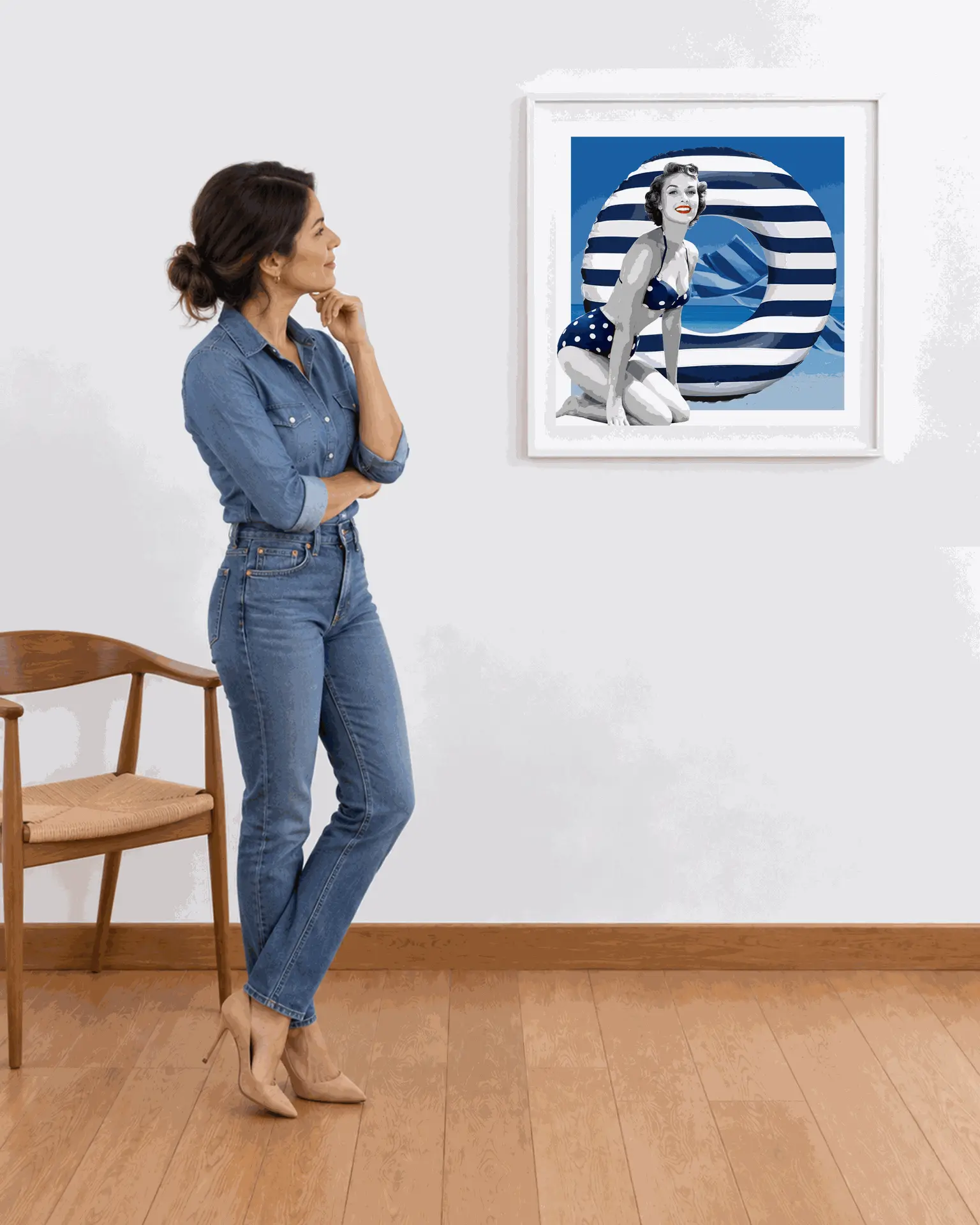

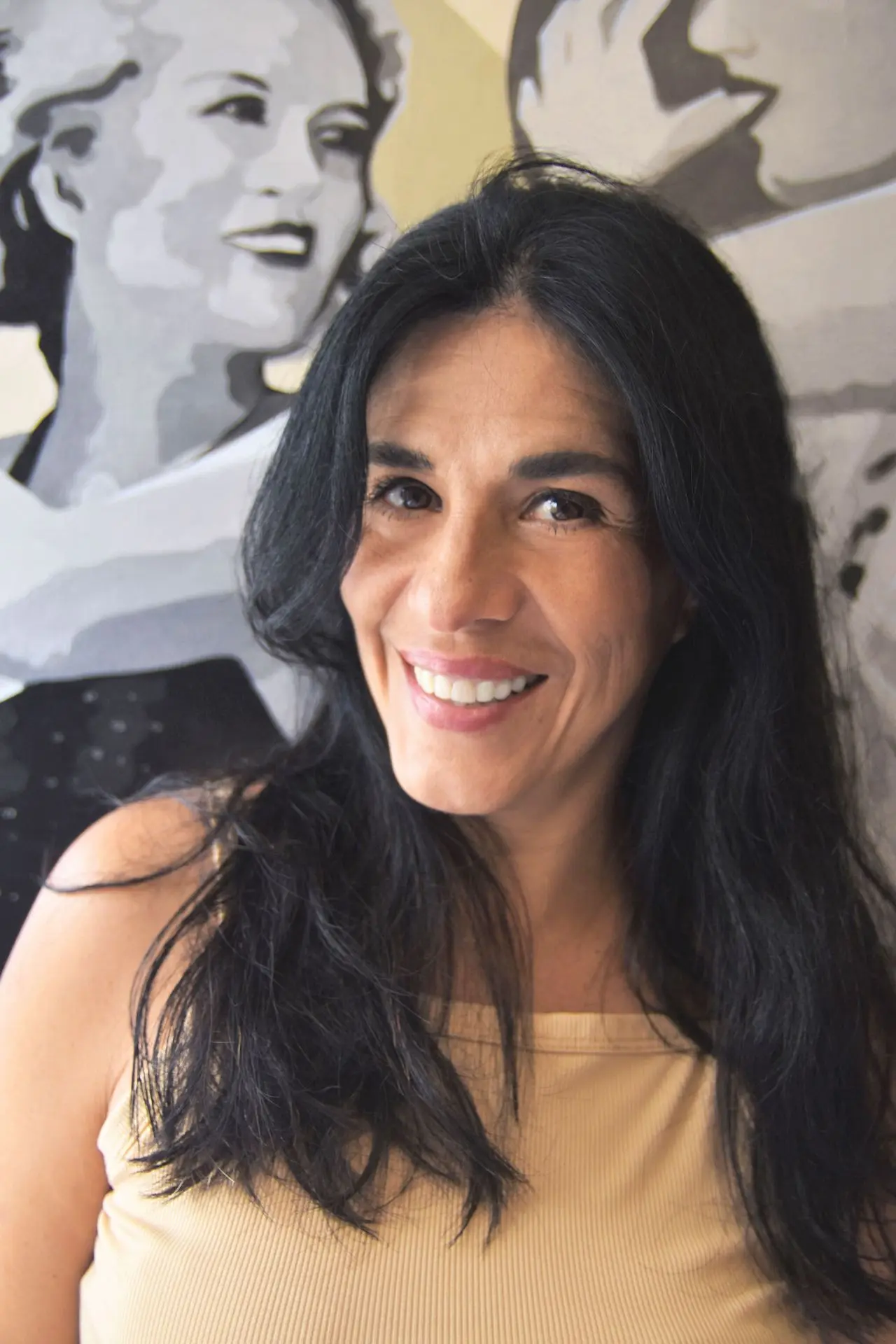
Her way of working starts on the inside. Before a subject she researches everything already done with it, and then does an honest introspection to find the real emotion, the one that comes from her and not from what she sees. She builds the image as a digital collage not long ago she wanted to paint the nostalgia of a work that didn't exist yet, so she photographed her blank canvases, her floor, her tiles, until she composed a piece where her own work papered the walls and moves the elements around until something tells her “this is it.” Only then does she project the sketch onto the canvas and start laying down paint. During the process she doesn't ask for opinions: she watches the work and lets it tell her what stays and what changes.
What best captures who she is lives in one of her bañistas. A client had just bought a beach house and wanted a large-format piece for the main living room, on a very tall wall; Magaly proposed a diptych, one piece hung higher than the other. In conversation it came up that the client had a photo of her mother in a swimsuit, from the fifties, and Magaly told her: let's put your mom in. That's how it turned out the mother on the left, in her period suit with a striped towel at the foot of a pool; on the right, two bathers keeping her company, looking toward some dogs, the ones from the house. A while later the client told her that some nights she sits in the living room with a glass of wine to talk to her mother while looking at the painting, and that she never told anyone, not even her husband, that the figure is her mom. It's her secret. Since then Magaly has painted several mothers into her bathers, and those portraits disguised as beach scenes have traveled to the United States, Australia, Mexico, Israel, and Peru.
That's what happens when someone lives with one of her works. The people who buy them talk about feeling accompanied, about an energy the painting gives off, and about wanting another after the first, and another. Her bathers tend to end up in dining rooms and main living rooms, where a lingering meal stretches on and the conversation turns warm; that's where the painting does its work. She connects with collectors who come for her technique and her track record, with young people or the young at heart who feel she turns down the noise of city life, and with interior designers, because her work has an easy body to it and sets the mood of a home without fighting anything around it.
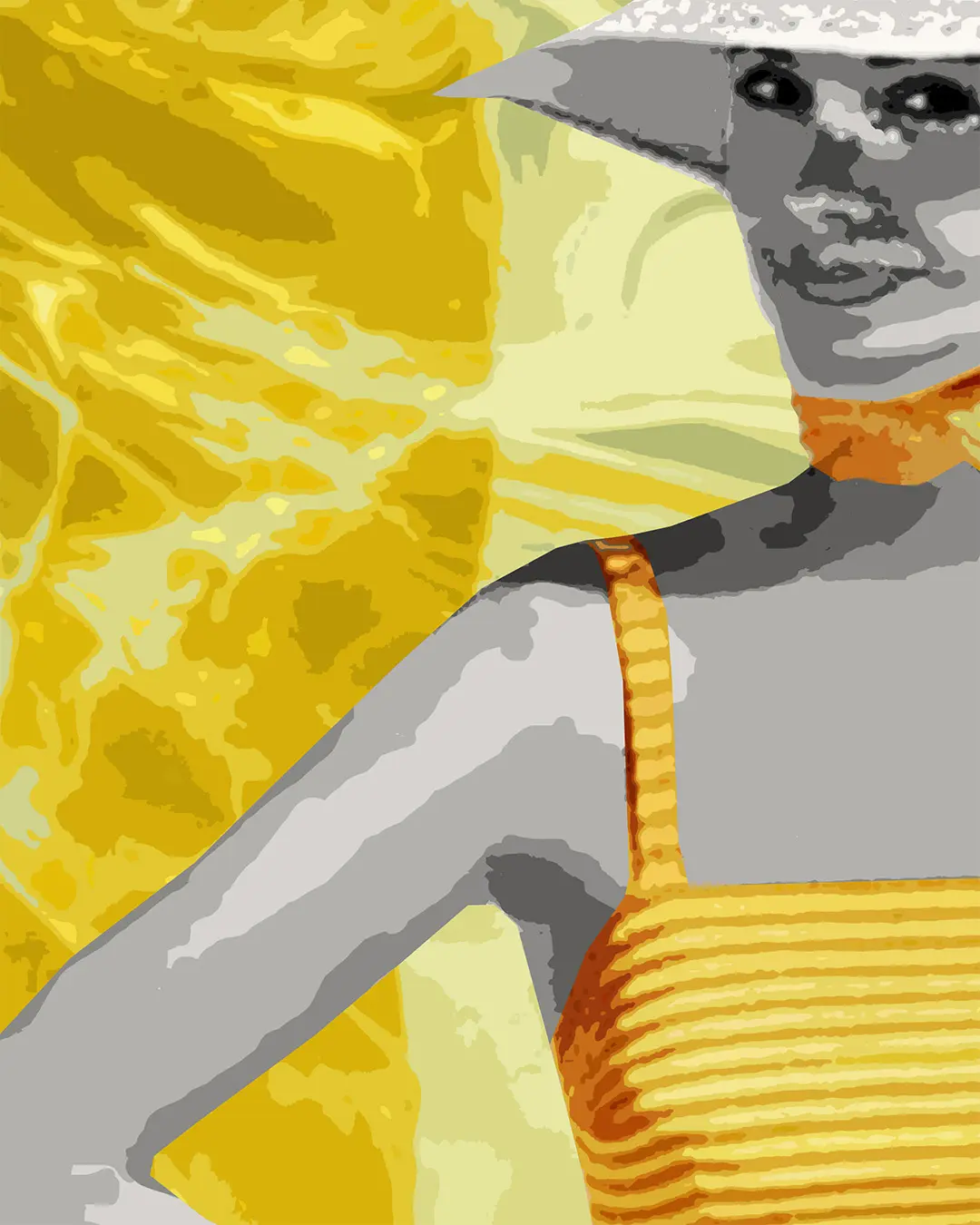

She works with originals and also with limited-edition Fine Art giclées, never more than fifty per edition, in whatever format the wall asks for; each piece travels with its certificate of authenticity, signed by hand. She especially loves commissions — that's where pieces like the diptych come from, or the three canvases a resort hotel asked her to make to cover its entire entrance wall, and her bathers even represented Peru at the 2015 Pan American Games — an idea she's carried since she was young, since she understood, standing in front of a Nam June Paik at the Guggenheim, that a work can be made for one exact place. Right now she's putting together new projects, wanting to move toward landscape and daylight, to return to oil soon, and toward a solo show in 2027.
That's why she has a place in The Ėditure. This isn't decoration to fill a wall: it's work you choose, that keeps you company, and that stays to talk. As she sums up what she'd like you to feel when you find it: I finally found what I was looking for.