MAITE
PEREDA
Artist
About Maite
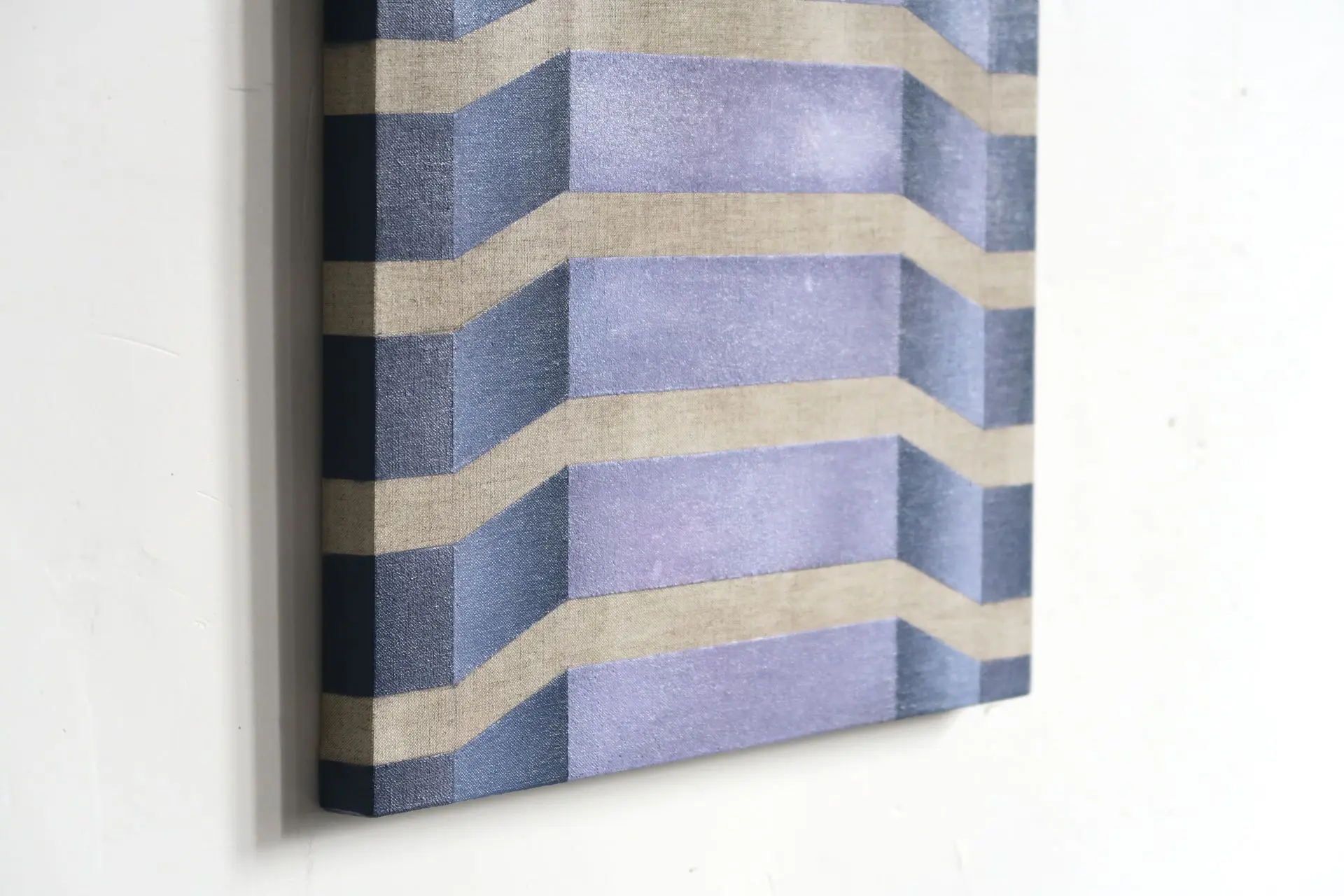
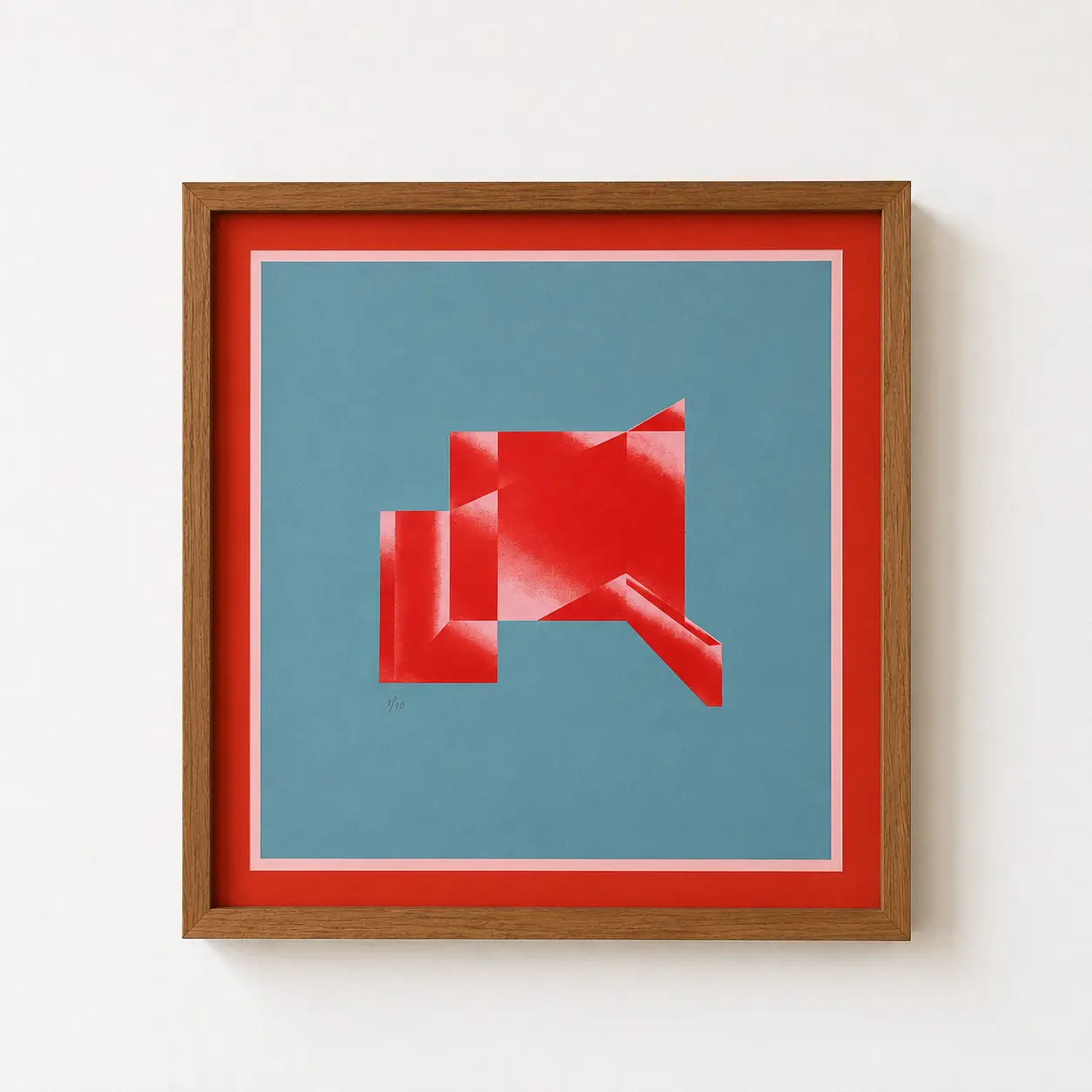
Maite Pereda paints geometry, and in her work everything starts with color. The techniques and the shapes shift from one canvas to the next, but what stays is that sense of a pop of color that holds its own on any wall it lands on. She grew up in a family where being creative was just a given her parents put her in front of everything, music, dance, photography until painting was the thing that stuck. From the first geometric canvas she made, she knew that was where she wanted to be, and order and geometry are still the foundation of what she does today.
What's interesting about how she works is that a piece doesn't come from a goal, it comes from the process. Maite tends to start from spaces or images with very organic contrasts of light and shadow, and from there she carries everything toward a geometric composition. She paints mostly in acrylic and brings in screenprinting to mark exactly that contrast between the organic scene that inspired her and the geometric figure she ends up with. And she doesn't stop at the square or rectangular stretcher: she lets the composition decide the final shape of the canvas, which often spills past the edges you'd expect.
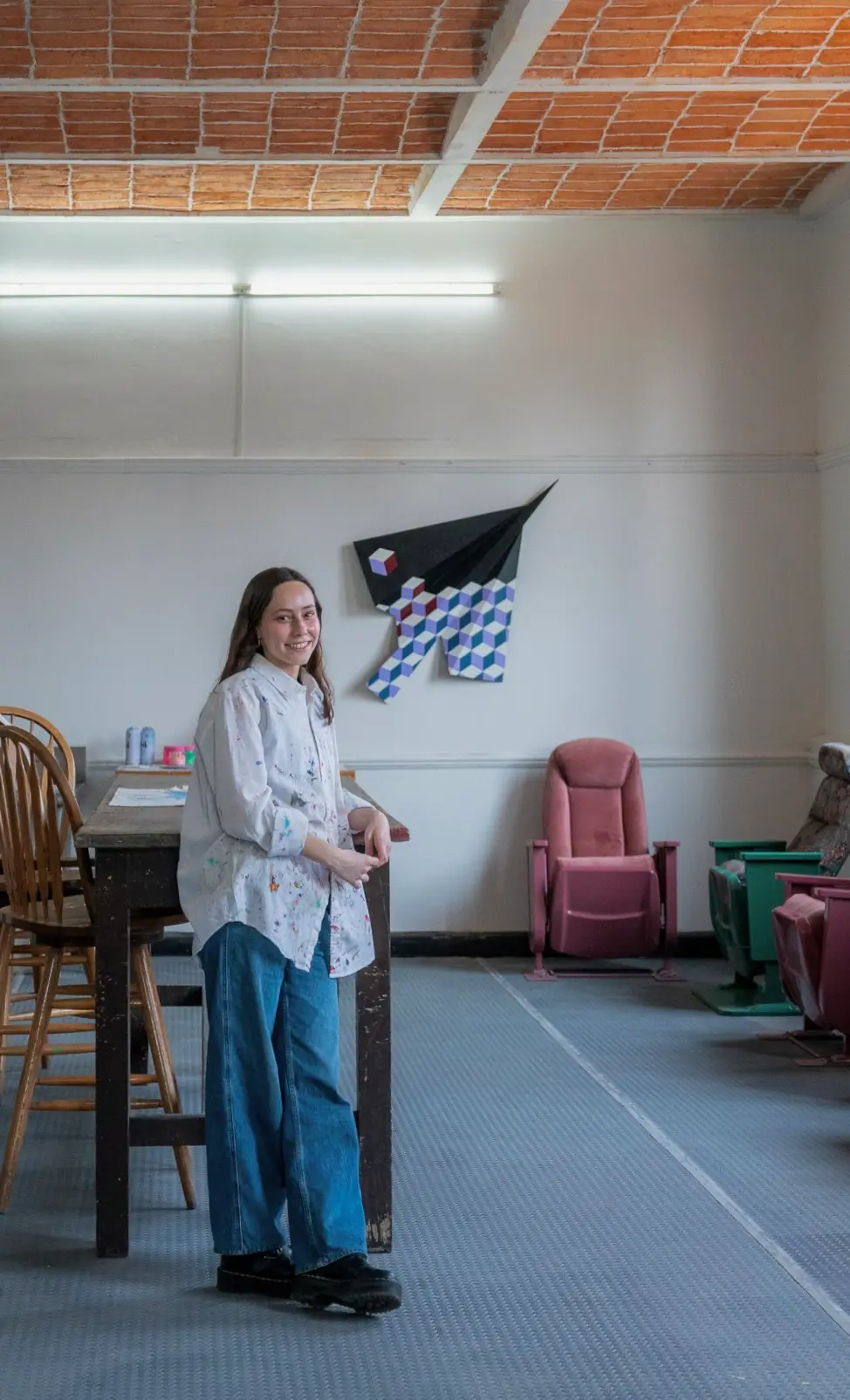
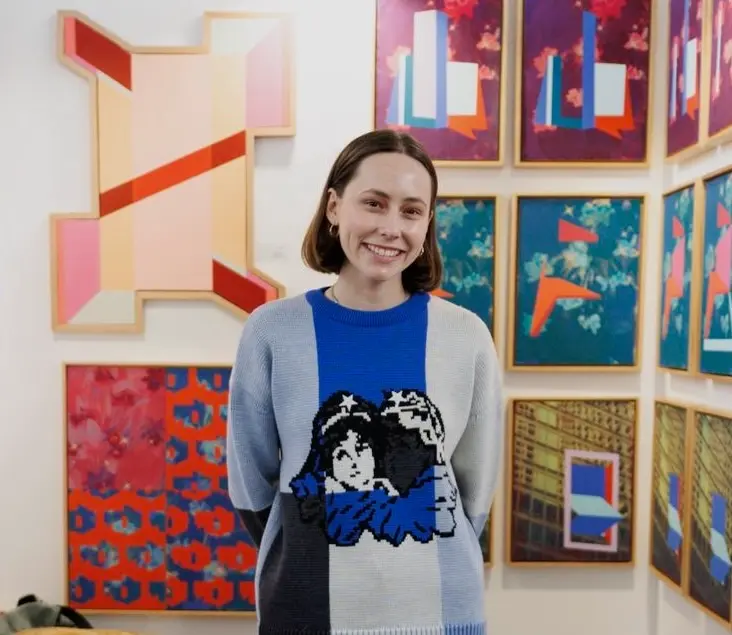
She studied Fine Art at Central Saint Martins in London, and her references say a lot about where she's looking. Bridget Riley and Mark Rothko, for the color she wrote her thesis on exactly that, on how the two of them, working almost entirely with color, manage to carry such deep emotion. And Peter Halley, for something more specific: the idea of pushing the limits of the work, of letting it grow beyond the rectangular frame. The artists she most likes to be in conversation with, though, are the ones who, like her, are at the start of the road, watching in real time how each of them builds their own foundations.
A Maite piece doesn't sit still. It changes with the natural light over the course of the day, so living with one means watching different shapes and colors surface depending on the hour. It works best right there, in spaces where that light can come in and play with the color, and where the forms can talk to the architecture around them. The first thing that happens when you see it is a kind of intrigue about the color; the second, once you settle in on the details, is an odd sort of calm, the kind that keeps you looking.
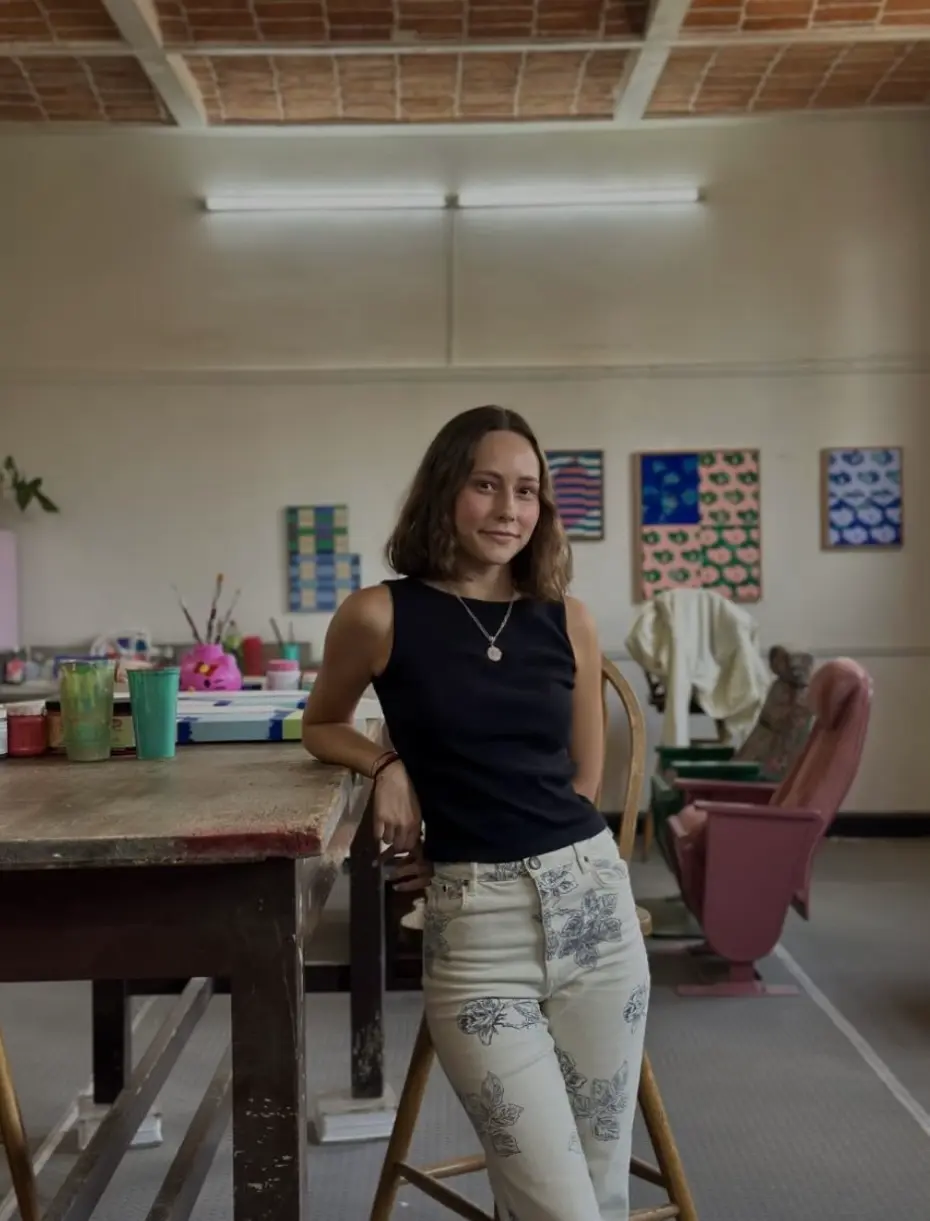
Maite tells the story of someone who, after an exhibition, wrote to her to say they'd spent months living with one of her pieces, and that what surprised them most was how it changed depending on the time of day. That conversation stayed with her for two reasons. One, because it sums up how she thinks about the work: that a canvas doesn't end when it leaves the studio, it keeps changing inside the home of whoever lives with it. And two, because her favorite paintings are Monet's Nymphéas at the Orangerie, for exactly that effect of movement with the light so hearing that someone had felt something similar in front of one of her own pieces meant a lot to her.
Her work connects most with a young, contemporary eye, and with people in design and architecture, who come in through the forms and through the way color shifts a room. Right now she's exploring how to fold the geometric together with more organic, photographic references, and she keeps experimenting with the shapes of the stretchers and with pieces that relate more directly to the space they're made for. What she protects through all of it is not drifting: keeping an honest practice while she builds her foundations, without forcing anything to fit a trend. If she had to leave one idea clear, it would be that one, that color and geometry can completely change how a space feels. to her from all over.