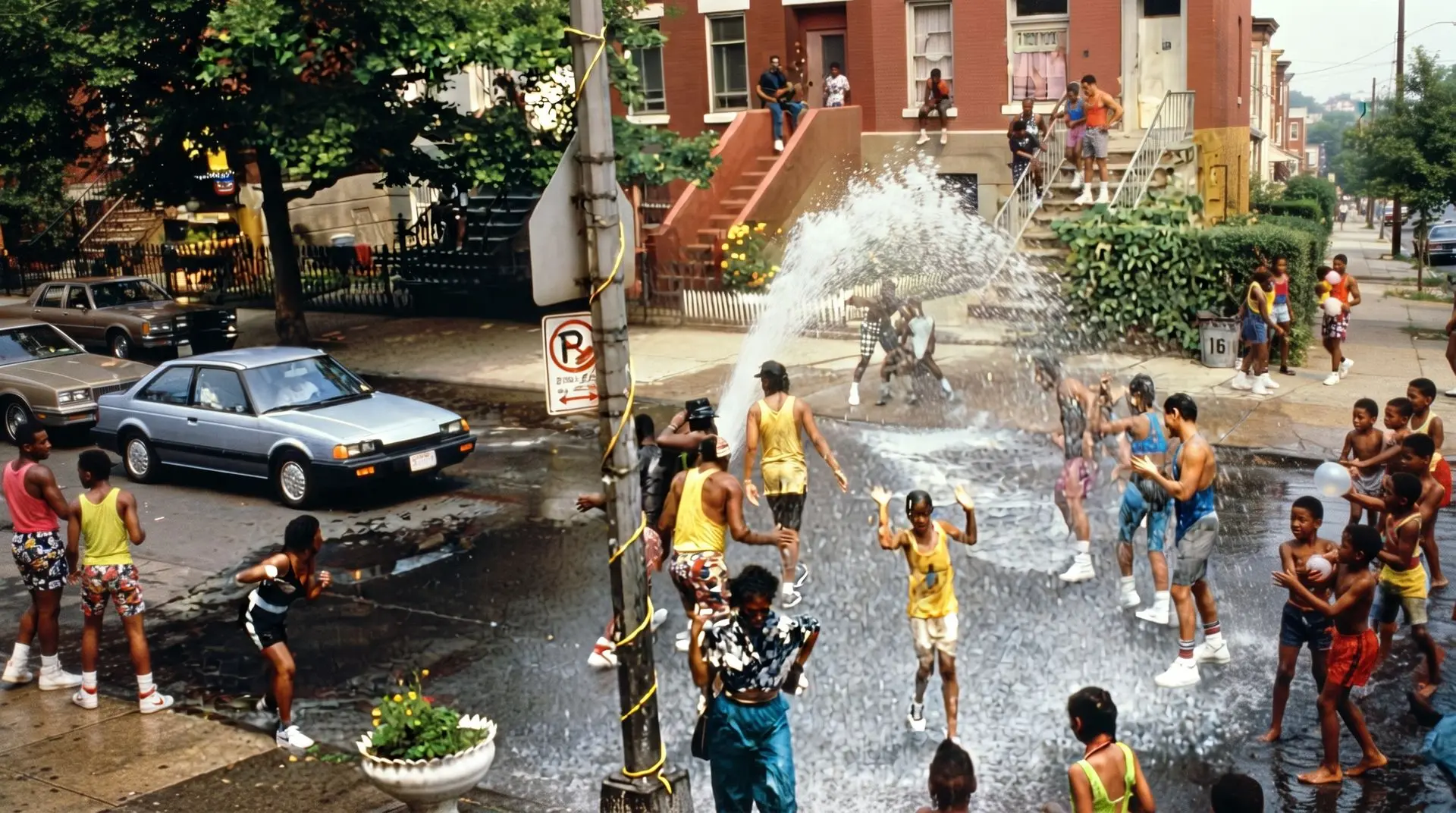
A child will watch a pigeon as if it were the first one in the world. His whole body takes off after a dog, a puddle, a falling leaf, and for a while nothing else exists. He doesn’t do it to be wise or sweet; he does it because he hasn’t yet learned how to be somewhere else. For him, only what’s happening exists, and what’s happening is enough.
Over the years that slips away, almost without our noticing. We start eating while thinking about the meeting, driving while replaying yesterday’s argument, listening to someone while quietly assembling our reply. The body is in one place and the head in another, nearly always. We stop looking at the pigeon because we already know what a pigeon is, and in that “I already know” half of life slips past us.
It isn’t a pretty exaggeration: someone actually measured it. Researchers at Harvard followed thousands of people throughout the day and found that we spend nearly half of our waking hours thinking about something other than what we’re doing. And the most interesting part isn’t that; it’s the other thing they saw: that drifting of the mind, more than the activity itself, is what ends up putting us in a bad mood. It matters less what we were doing; what matters is that we weren’t fully there.
It makes sense, if you think about it. When the mind wanders, it almost always goes to one of two places: to the future, to rehearse something that hasn’t happened yet, or to the past, to turn over something that can no longer be fixed. Worry on one side, regret on the other. And between the two, the only moment where things actually happen this one is left thin. The past is gone and the future is an idea; what you can touch, smell, and hear is always here.
Even emotions work this way. A neuroscientist described it in a way that helps: the physical part of an emotion the blow to the chest, the hot face, the knot lasts far less than we think, just a handful of seconds. What stretches it out for hours, or days, isn’t the emotion; it’s the story we keep telling on top of it. Real anger passes quickly. The “I can’t believe he said that to me,” repeated all afternoon, is something else, and that part we choose ourselves.
That’s why coming back to the present isn’t a course or a technique with steps. It’s something much smaller and more within reach: drinking your coffee actually tasting the coffee, not checking your phone at the same time. Hearing someone without thinking about what you’re going to answer. Walking somewhere and noticing that the day is cool. You don’t have to retreat to a mountain; it’s enough to turn down the volume on the noise of what’s missing and what’s already gone, just enough to notice what’s already here.
The curious thing is that there’s nothing new to learn. It’s more like remembering something we knew as children and stopped practicing. The child who stands there watching the pigeon isn’t doing a mindfulness exercise; he’s simply where he is. Maybe the good life is nothing more than that, spread across a thousand small moments: truly being where you are, even if it’s watching some ordinary pigeon take flight.