
I still remember the knot in my stomach on school mornings. It wasn’t fear of anything in particular. It was knowing I wouldn’t be able to focus all day, and that at any moment I might get called up to read in front of everyone. I learned to read later than the other kids, and that gap which feels enormous when you’re small followed me everywhere like a shadow.
I wanted to sit in the back, where you can shrink down and almost disappear. I almost always ended up in front, sometimes right next to the teacher’s desk, turned to face the class. I’d study in the afternoon, understand it, and by the next morning it had wiped clean, as if I’d never seen it. The system back then was built so that a girl like me would live with that tight stomach, even if no one meant it that way.
There was a bit of everything. Lovely teachers who, without really knowing what was going on with me, were gentle about it, and others who put me on the spot. I’d sometimes fall asleep in class and get woken up in a way that came with the whole room already laughing. Later I got a little rebellious; once I refused to leave when I was sent out, and the teacher ended up carrying my desk, with me still in it, out to the hallway, where he left me with the door locked. I can laugh telling it now, but at the time there was nothing funny about it.
I managed however I could. From early on I did something I’d only understand years later was pure public relations: I’d get close to the kids who were good at school, and between them they’d help me out. In the afternoons I always had a tutor for my homework; one of them, an older lady, had either figured out how my head worked or simply couldn’t be bothered to fight it, because she’d let me nap for a while and do the homework herself. And yes, I copied on exams whenever I could. None of it made me proud, but now I see it for what it was: a little girl solving, as best she could, something that was bigger than her.
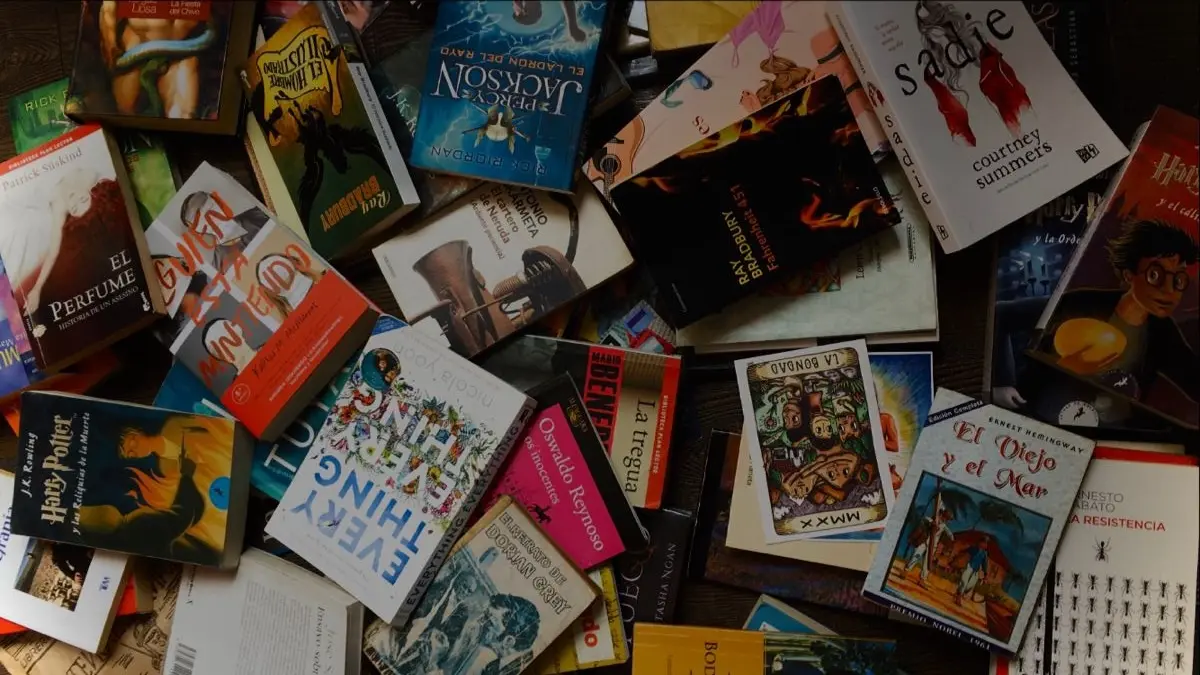
That’s why the math teacher stayed with me — the one who told me one day that he hoped I’d be lucky enough to have money when I grew up, because on my own I wasn’t going to manage. He wasn’t a bad man. I think he honestly didn’t understand what he was looking at. But things like that stay with you.
Years later all of it got a name: dyslexia, attention deficit, and a hypersensitivity that makes the attention part even more tangled. It turned out it wasn’t that I couldn’t pay attention; it was that all of it went to whatever truly interested me and almost none to the rest. Hyperfocus, they call it. Seen that way, that girl wasn’t broken, and she wasn’t lazy. She read the world in a different order, and school only knew how to grade one order.
What saved me didn’t happen inside the classroom. My mother had the instinct to look for things outside of school, somewhere I could be myself without that shadow over me. We tried a few until we landed on dance, and the search ended there. I’d spend three or four hours at it every afternoon. I competed seriously and I was good, really good, and for a girl who felt like the last in line every morning, that changes everything.

Dance was the place where there was no knot in my stomach. Things stayed in my body the first time, without repeating them a thousand times, and at last there was something I was the one who knew. It wasn’t a hobby to keep me busy; it was where, every afternoon, I got back a little of what school took from me in the morning. When I really think about it, my mother didn’t sign me up for a class. She gave me another mirror to see myself in.
And then there was my family. Big, close, warm the kind where you never feel entirely alone. Between dance in the afternoons and my home, I gathered on the outside the confidence school wouldn’t let me build on the inside. Sometimes I wonder what would have happened if school had been my only mirror, without dance and without my family, and I’m not sure what would have been left of the idea I had of myself. I’d rather not imagine it.
Because in the end, the hardest part wasn’t reading late or forgetting my homework. It was believing I was capable. Dyslexia didn’t take that from me; I talked myself out of it over years, swallowing what the classroom seemed to say about me. And getting that confidence back was, in time, what truly changed my life far more than learning to read quickly.
These days I get along with my head just as it is. I know I’ll throw myself completely into what I love and that other things will slide right off me, and I’ve stopped fighting it. That girl up front, the one with the knot in her stomach, wasn’t wrong to feel she learned differently. She just needed someone to tell her she wasn’t learning wrong she was learning in her own time. Lucky for her, in the afternoons, someone already was.