Some artists are obsessed with perfection, while others delve into imperfection until it becomes truth. Chuma Montemayor belongs to the latter group.
His work does not seek neatness or complacency; it seeks understanding. It is the result of a life that looked darkness in the face and decided to make it a livable place. Before devoting himself to visual art, Chuma was a journalist. For years, he observed the world through words and the camera, recording what was happening outside. But one event—the kidnapping of his mother—led him to look inward.
That episode marked a turning point that transformed not only his way of seeing things, but also his way of being.
From registration to shelter
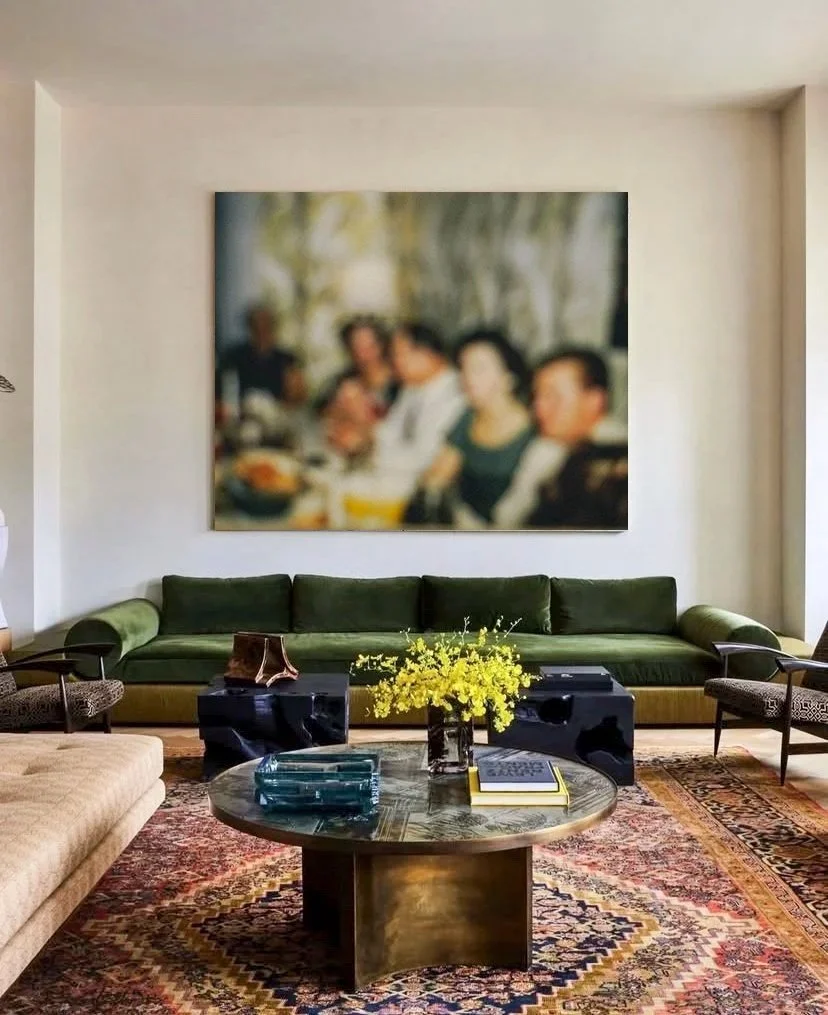
Chuma's first images were exercises in observation: streets, structures, bodies in transit. But over time, the camera ceased to be a technical tool and became an extension of his memory. The figures began to blur, the lights filtered through, the edges disappeared. Sharpness lost its meaning, and blurring became a language. Each image began to resemble a breath: an attempt to retain what inevitably slips away.
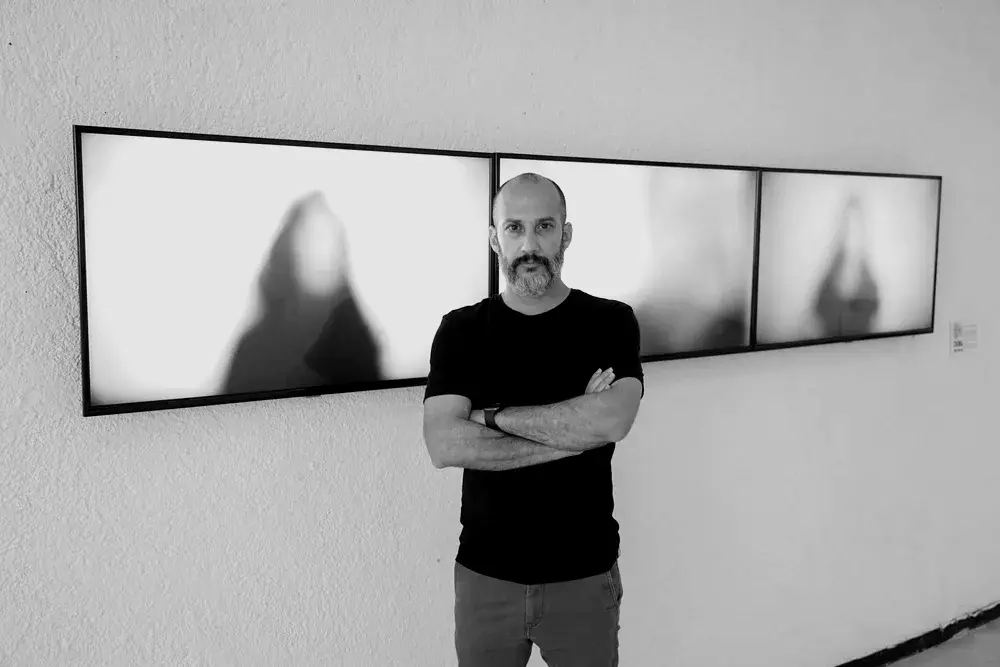
“I'm not looking to make pretty art,” he says, “I'm looking to understand what hurts and what moves inside.”
His photographs and manipulated pieces do not offer answers; they open up space.
The broken lens, the transparency, the overlapping layers function as a metaphor for memory: it is never complete, never accurate, but it contains a beauty that only appears when viewed with patience. Since then, the camera has become an instrument of reconstruction.
For him, looking is remembering without getting lost.
Memory as a subject
Chuma's work is not born of nostalgia, but of lucidity. His exploration starts with the body and mind, with the cracks left by experience, with the way identity is recomposed after fracture.
The autobiographical elements in his work are not confessional, but architectural: he constructs a system of signs that speaks of the mind, of time, of the bond with father and mother, of the fragility of mental health, of the way memories fade and reappear. Each piece is one layer upon another: a superimposition of emotions, textures, absences.
His process does not seek to erase the past, but rather to transform it into form. Blurring ceases to be a mistake and becomes ethical: accepting that total clarity does not exist, that what hurts can also enlighten.
“El foco se rompe como se rompe la memoria, y en ese quiebre aparece lo verdaderamente humano.”
Art as a companion
In a world that demands immediacy, Chuma's work proposes silence. Each of his works is a pause: a reminder that looking slowly is also a way of caring.
Its aesthetic is full of emptiness, but not absence; full of light, but not artifice. It invites us to recognize what is not always said: that vulnerability can be fertile ground and that fragility, when properly observed, is a form of strength.
His art does not seek to impress, but rather to accompany. And therein lies its power. There is a beauty that does not shout; a beauty that remains, that breathes, that changes with the light of day and the state of the soul.
Encounter with The Room Of
In The Room Of, Chuma finds an echo. His work embodies the values that define this platform: sensitivity, purpose, depth, and an aesthetic vision born from human experience.
His visual and emotional language aligns with Cordelia's quest to present art with soul, art that not only decorates but transforms the spaces it inhabits. Chuma is one of those artists who are not only collected but lived.
His works engage in dialogue with real life, with the light of home, with shared silences. His aesthetic—introspective, unhurried, deeply human—reflects the philosophy of quiet emotional luxury that defines The Room Of: the idea that true sophistication lies in honesty, depth, and calm.
How to observe? (and where to begin)
1
Start with what breathes slowly.
Blurred images are an invitation to silence. They do not ask for explanation; they ask for time.
2
Seek dialogue between text and image.
The pieces with writing are emotional keys; they unlock the intimate tone of all his work.
3
Think in layers.
A piece by Chuma works on its own, but its depth is multiplied when it coexists with others.
4
Live with it.
It is not a piece to hang and forget. It is to be experienced: a presence that changes with the light, with the days, with your mood.
Between the wound and the light
Chuma Montemayor does not paint or photograph to heal wounds, but rather to view them with respect. His work is a reminder that beauty can arise from imperfection, that art does not always heal, but it always accompanies.
In times of noise and speed, his work is a necessary pause. A space of silence where fragility and strength can coexist. And in that balance, between what hurts and what illuminates, Chuma reminds us that understanding pain is not always overcoming it; sometimes, it is looking at it in a new light.